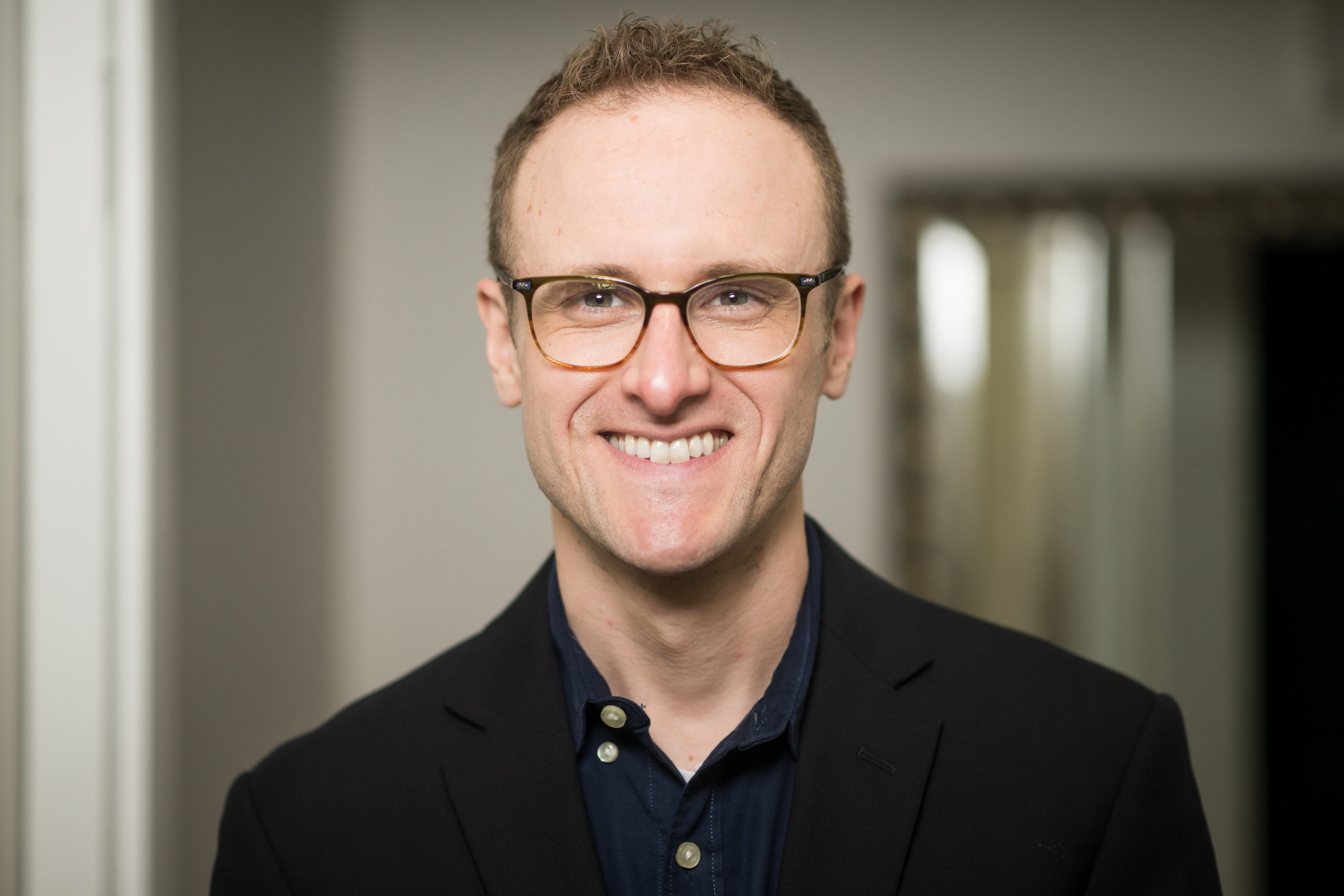
Finding the Will to Recover: Nick Prefontaine | EP 493


 Apple Podcasts
 Spotify
 Castro
 RSS Feed
 Finding the Will to Recover: Nick Prefontaine on Running Out of the Hospital After Doctors Said He Never Would
At 14, Nick Prefontaine caught the edge of his snowboard going off the biggest jump in the terrain park — and that was the last thing he remembered. He woke up in a world where doctors had already told his parents he might never walk, talk, or eat on his own again. Less than 90 days later, he ran out of the hospital.
In this conversation, Nick takes us inside the recovery the motivational posters never show you. We talk about the mother who refused to let a hopeless prognosis be spoken over her unconscious son, the inner voice that whispered you're going to run out of the hospital, and the STEP system — Support, Trust, Energy, Persistence — that he didn't learn from a textbook but built from inside his own crisis.
If you're standing at a starting line you never asked for, wondering whether you have what it takes to get back up, Nick's story is a hand reaching back to pull you forward.
About Nick Prefontaine
Nick is a three-time bestselling author and nationally recognized speaker, named one of the top motivational speakers by Yahoo Finance. He's the founder of Common Goal, where he works with people in the middle of trauma, crisis, and life-altering challenges — helping them not just get through it, but thrive on the other side. He also runs a family real estate business buying and selling homes creatively.
What we cover:
- The day of the accident and the "coincidences" that saved his life
- Why his parents shielded him from the doctors' prognosis — and how that shaped his recovery
- The STEP system: Support, Trust, Energy, Persistence
- The inner voice that became his common goal, and what Nick now believes that voice is
- Losing his voice for nearly a decade, and what persistence looked like day by day
- The single moment of doubt he allowed himself — and his mother's answer
- Making a full recovery: marathons, snowboarding again, and what he carries forward
Connect with Nick:
🪜 Download the free STEP ebook: https://nickprefontaine.com/step 🎥 The STEP video series ($37): https://nickprefontaine.com
Let's keep the conversation going.
What resonated with you in Nick's story? Was there a moment in your own life when someone refused to speak the worst over you — or a time you had to take the next step without being able to see the whole staircase? Leave a comment and share it. And if this episode reached someone you love, pass it along.
📰 Read the companion article and join the discussion: https://grief2growth.substack.com
You've been listening. You're doing the work. But there's still this feeling that you're circling the same place.
Maybe you've thought about working with me one-on-one. Maybe something's held you back.
I get that. And I want you to know there's still a place for you.
All of it, pay what you want. You decide what it's worth. Nobody gets turned away because of money.
The International Association for Near-Death Studies or IANDS will host its annual conference at the Hyatt Regency in Bellevue. The event features an all-star lineup of keynotes like Proof of Heaven Author Eben Alexander, MD, and Dying to Be Me Author Anita Moorjani. I Early bird registration rates are available through July 15.
Visit IANDS.org to register
The International Association for Near-Death Studies or IANDS will host its annual conference at the Hyatt Regency in Bellevue. The event features an all-star lineup of keynotes like Proof of Heaven Author Eben Alexander, MD, and Dying to Be Me Author Anita Moorjani. I Early bird registration rates are available through July 15.
Visit IANDS.org to register
Want to go deeper? My Substack is where I share solo essays on grief, consciousness, and continuing bonds — thoughts that don't always make it into the podcast. It's also home to a community of listeners who get it, because they're living it too. Free to subscribe. Find it at substack.com/grief2growth.
🧑🏿🤝🧑🏻 Join me on Substack- connect with others and me
👛 Subscribe to Grief 2 Growth Premium (bonus episodes)
📰 Get A Free Gift
📅 Book A Complimentary Discovery Call
📈 Leave A Review
Thanks so much for your support
Close your eyes and imagine. What if the things in life that caused us the greatest pain, the things that bring us grief, are challenges. Challenges designed to help us grow to ultimately become what we were always meant to be. We feel like we've been buried, but what if, like a seed, we've been planted? And having been planted, we grow to become a mighty tree. Now, open your eyes. Open your eyes to this way of viewing life. Come with me as we explore your true, infinite, eternal nature. This is Grief to Growth, and I am your host, Brian Smith. Hey there, welcome to Grief to Growth. I'm Brian Smith, and I'm glad you're here. Whether this is your first time joining us, or you've been walking this road with me for a while, I am really glad to have you here today. This show exists for the moments when life stops making sense. When you've lost someone or something that you don't know how to live without. We explore grief, we explore loss, and we ask the questions that don't have easy answers, like what happens after we die, and whether the love we share can survive the distance. My guests come from all different backgrounds, but they all share one thing. They've been through the fire, and they have something real to say about what they found on the other side. And Nick Prefontaine is no exception to that. Nick Prefontaine is living proof that the human spirit doesn't just survive, it runs. At 14 years old, Nick suffered a life threatening snowboarding accident that left his parents sitting in a hospital being told their son might never walk, talk, or eat on his own again. Less than 90 days later, he didn't just walk out of the hospital, he ran out of the hospital. But the physical recovery was only part of the story. Nick had to find his voice literally, rebuilding his ability to speak from the ground up. Today, Nick is a three-time bestselling author and nationally recognized speaker named one of the top motivational speakers by Yahoo Finance and the founder of Common Goal. He developed a step system, support, trust, energy, and persistence, not from a textbook, but from the inside of his own crisis. So in our conversation today, we're going to go deep into what it actually takes to come back from something that many people would think should end you, not the motivational poster version, the real thing. What does it feel like to wake up and not recognize the body you're living in? How does a 14-year-old find the will to fight when the adults in the room have already written the prognosis? And what does Nick now know about resilience, family, and the persistence of the human spirit that he couldn't have learned any other way? So if you're a season right now where you're not sure what you have what it takes to get back up, a grief or loss or a crisis has made you question everything you thought you were. This one's for you. And if you'd like to continue the conversation with me after the episode, head over to grief2growth.substack.com. You'll find an article there about today's discussion where you can comment and connect with me and other listeners. And with that, let's welcome Nick Prefontaine. How Brian so excited to be here. Thank you. Really glad to have you here today, Nick. Your story is just one of fits right in with my with the theme of my program, grief to growth, you know, going through the most difficult things in life and and coming back from this thing. So type me back to that time when you were 14 and you had your accident. Sure. Yeah, it was like any ski club day. We were excited ski club Wednesday. We always we always look forward to it. And we always had it. And actually, it's funny. My sister is raising a family right now in the same town that we grew up in. And she heard the kids a few years older than her kids, my niece and nephew talking about ski club Wednesday. And she's like, Oh, no, I know about ski club Wednesday. So yeah, it was a ski club Wednesday. And we had got released a little bit early from school. So that was always a big deal. For being 14 years old, missing any bit of school, even a little bit was a big deal. So my buddies and I all brought our snowboard gear onto the bus to get ready. So as not to miss a precious moment once we got to the mountain, and we got to the mountain, had a right for the chairlift with the rest of the class, they went inside and waste time getting ready. But we're all ready to go. So we had a right for the chairlift. And going up, we noticed that it was very icy, because it had been raining early in the day. So people were wiping out everywhere. And it wasn't slowing us down. Not in the least. And where the chair went over Brian was right over the terrain park, where all the jumps were like the jumps and rails and everything like that. So I knew as soon as I saw it, that I had to go off the biggest jump in the terrain park. So got this out buckled into my stoneboard took a breath of that crisp winter air and confidently charged towards that jump with all my speed and going up to the jump I caught the edge of my snowboard. And that was the last thing that I remember. So they wanted they actually wanted to bring a helicopter to the mountain to rush me to the hospital. And they couldn't, because it was too windy. So they had to send in an ambulance. And out of all the paramedics on staff, there was only one who could intimate right in the spot. And I needed that to be able to breathe. And I actually just learned a little while ago, that I thought he was only he, the coincidence was he was the right paramedic to show up in the mountain. It actually goes a little, a little, a level deeper than that. He was actually in the parking lot. When he got the call, quiz generally. So definitely a lot of things had to break right for me to hear today with you and your listeners to tell this story. Yeah, that was the main one. And then the I also learned something else I learned after the fact was that my goggles were the only protection that my head had. So the doctors, experts, eyewitness accounts, they told me that like friends and people who saw it, they told me that not only did my goggles, they were very thick with a lot of padding. I never would have found them that I would need them to brace my fall. But not only did they brace my initial fall, as I continue to roll down the mountain and continue to tip my head, they told me that the goggles moved to cushion each floor between my head and the ice. And probably the most consequential thing. When I got to the hospital, I mean, I was out, I was in a coma, partially induced coma in the intensive care unit. And the only people who are allowed into my room at that time, Brian, were my parents. So it was important at that time that the doctors they didn't they weren't doing anything, no fault of their own, but they just came into the room and came to show the prognosis with my parents right in front of me the not so good news, not so good news, they can't build people up with hope at that point. Liability reasons and everything like that. So right when they started to talk and share the news right in front of me, even though I was in a coma, my mom stopped them. And she said, No, not in front of him. So she knew that she understood that even though I was in a coma, I was still taking in information. So she made the doctors step outside the room. And then once they were there, that's when they said that I probably wouldn't be able to walk, talk or eat on my own ever again. So even even if I came out of the coma, there was a good chance that I only need 24 hour care for the rest of my life. And my parents, to their credit, didn't accept this like a death sentence, like so many patients do, they and their families. So they took the information, thanked the doctors and allowed me to treat it like any of the situation. So this was no different than any other challenge that I faced in my life. And because of that, I really didn't see the difference. So I ended up being in the coma, it was a partially induced coma for three weeks. I really don't remember a month because it was partially induced. And it was a month after my accident, I was transported to a rehab hospital in Boston. And that's where I kind of began my journey of having to learn how to walk, talk and eat again. And it was right at this point that really my memories start to come back, like I can start to remember things the beginning of March 2003. However, that month from February 5 to March 5 2003, that's gone. I have no memory or recollection of that. So that's gone. And it was right around this time that I started to unknowingly use a system to not only make a full recovery, and I'll actually let you know where the the goal of running out of the hospital comes from. And that's a step system. Step as an acronym, what I'll do is I'll give for you and your listeners, I'll give like a 10,000 foot view. And then if anyone's interested in learning more at the end, I can let them know how they can download step my ebook for free. And step stands for support. So make sure you have the support of your family and friends right from the beginning. And this is going to have you falling back on relationships that you built prior to your setback. T is an already talked about how my parents were, were my support in the beginning and throughout my recovery. And so trust that once you take your first step, your next steps always going to be available to you. And this also starts with trusting that voice that we all have inside of ourselves, but too many too much of the time we silence it, we push it down, or we we don't listen to it, we ignore it. So where that comes from is after I was transported, Brian to the rehab hospital. I can remember this was even before I could talk. So I can remember overhearing my parents talking with my team of doctors and therapists. And they were saying, Okay, what do we need to do to make sure Nick makes a full recovery? I heard in the back of my head, you're going to run out of the hospital. So then running out of the hospital became our common goal. And I think I just I just share that to illustrate the trust and why it's so important to listen to that, that that voice that you have inside of yourself. Yeah, he is energy. So maintain your energy allows your body's natural ability to be able to heal itself. And medication has the potential to get in the way of that. So I mean, obviously within reason here and energy continues to evolve throughout my life. And throughout anyone's life, it does. But at that point, it was my parents wanted to give me off of the medication as soon as possible. So unless it wasn't absolutely critical to my survival, they often not to have me on any medicine and medication. And then finally, P is persistence. So once you've taken your first step, keep getting up every day and taking your next step, no matter how small and by continuing to move forward every day, you are building an unstoppable momentum. So if you fast forward less than 60 days later, after being transported to the rehab hospital, I ran out of the hospital. And Brian, it wasn't like my work was done at that point. I it was it was just the beginning, if anything, it was just the starting line, really. I had to continue to go to outpatient therapy for the same things, physical, occupational and speech therapy for another six months, five days a week. And unlike when I was in inpatient rehab, which was double sessions, physical, occupational, speech therapy, five days a week, outpatient therapy is only what I say only, it was a single sessions, five days a week physical, occupational and speech therapy. So I also had to I mentioned, actually, I don't know if I mentioned this, the I was in eighth grade when I got in the accident. So I was only 14. And I, they gave me the option when I came home from the hospital to say, Oh, it's okay, you know, focus on your rehab, and you can take your time and get better. And just you can do eighth grade again next year. And I was like, I don't want to do that. That's something that's so terrible. So what I did, I continued for the rest of the year, this was the end of April to June, I continued to go to school, but I wasn't able to be with my classmates, I would get private tutored in school, and then I had to get private tutoring all summer long in order to continue on the high school with the rest of my classmates. And looking back at it, Brian, it's a little surreal that only 18 months later, I got because I'm sure you get this, and your listeners get this when your younger time is compressed. So if you're if you think like six months out, 12 months out, 18 months out, seems like a lifetime. Yeah. When you're younger. However, the older I get, I'm seeing it's really not that long. It's like a blink. So only 18 months later, after finishing my rehab, from my some morning accident and being in a coma, I got my start in real estate. And that was door knocking pre foreclosure doors or homeowners that have received the notice of default letter from the bank, meaning that they have missed several payments on their loan, the banks closed on the home. And I would go I would go to their door, go to door to door and try to set up meetings for one of our investors to meet with them the following week about potentially helping them out of their unfortunate situation. And it took Brian, it actually took a mentor pointing this out to me five years ago, that I realized it. And she said, Well, because it was so soon after your accident, this was a part of your recovery, going door to door, helping people out of their unfortunate situation. So I continue to do that throughout the rest of high school. And then when I graduated high school, I got my real started starting to get my real estate license. And then was helping buyers and sellers as a realtor like sales. Then my dad, my dad actually came to me, he approached me in 2014. And he was starting to buy homes again, creatively. So without using any of his money, or signing personally, or big investor down payments or money or anything like that. And then however, he was acquiring them. So I'm still I'm still involved in now this family family business call it buying and selling real estate. So I'll just give you like 10,000 foot view, some of the ways that we buy so we'll buy on a lease purchase. So basically a delayed cash sale, take over all response and responsibility for maintenance apparent upkeep. And then in the future, someday in the future, two, three or five years, we'll we'll cash it out. And another way is if that's not closing on it. And then another way if they have a an existing loan will actually close on its subject to that existing loan. And a third way just to keep it simple is if if a seller doesn't have any debt on the property, we can actually close on it and structure principal only payments back to the seller. However, we're buying it, we're always selling it on a rent to own. And that's where I kind of came into the picture because my dad approached me in 2014. And he was starting to accumulate all these properties. And he needed someone's help for getting them on the rent to own market. And looking for a rental buyer. So I originally at the end of 2014 started helping him with that just right alongside being a realtor. And what I found is over the next 13 months, my income totally shifted with him. I was making the majority of my money with him as an investor, because putting them on the rental market is different than listing them as a realtor. It's a different pool of buyers. So there's only roughly 18% of the market who can walk into a bank and get a loan. So we're marketing to the other bigger portion of buyers. Now, they're not all good. However, there's a large swath in there who they make great money. They have great incomes and they have money saved by down payment. They're just not for whatever reason able to walk into a bank and get a loan. So we're getting them into the home with the down payment anywhere from three to 10%. Getting them connected with credit enhancement, credit repair, and then getting them on the path to home ownership where there wouldn't be a path for them otherwise. So now it's in addition to our family business, now we also have associates all over the country who we help put in place the same systems, tools, and processes that have made us so successful and help them put that into their business. So I'm doing that and I'm also doing this work with Common Goal and working with individuals who are going through in the midst of their own challenge, trauma, life crisis, struggle, help number one get through it and then to be able to thrive with the rest of their lives. Awesome. That's awesome. So I want to take you back to your accident and you mentioned that the doctor said that you would never or possibly never be able to walk or talk or eat on your a couple of months later. I don't remember that. It was never something that was consciously, I was never told that. So your parents did not inform you of that? Yeah, that was what I think was important. Whether it would affect me or not, I think it would have. It was important that they kept that information from me. So obviously the doctors have to give the worst case scenario. They can't paint a rosy picture, viability, insurance, everything. They get sued nonstop if they were doing that. Yeah, so I didn't know of that. Your goal when you woke up was like, I'm going to fully recover. So what happened was when I came out of the coma and got my wits about me, got my senses back and everything, it was how it was presented to me was this happened. Yeah, this obviously it's not ideal, not what anyone wanted. But now we just have to, we got to do this work. And then so we can get back home and get back to living our life. That was always how it was presented to me. So I never even considered an alternative. It was just that's how it was presented. Yeah, I know you mentioned you were in a coma for a while. Do you remember leaving your body or anything like that? No, I get that question all the time. So as I'm sure you can imagine, yeah, no, it was it was interesting, because like I mentioned that period from February 5 to March 5 2003, that's for the most part, that's gone. I have no memories of that period. Yeah, I can't even yeah, I get nothing. And it's actually I think that's for a reason. Like they didn't want me to, they didn't want me to remember that. So I think I'm fortunate that I don't have any memory of that time. Yeah. So that the the step process that you you came up with, that's just something that did your parents help you with that? Or did that just come from within you? Oh, all right. So I'll tell you exactly how it came about the Alright, so I was doing and I've been doing really, since I graduated from high school, because that that's kind of where we really, I kind of skipped ahead a bunch. But since I've graduated from high school, I vote no matter what I'm doing, for work and to earn a living never. It's never left me. I've always had this voice in the back of my head, Brian, it's saying always. Yeah, great, Nick. What you really need to be doing is telling your story from stage and helping trauma survivors thrive with the rest of their lives. So really, since we started holding events in 2016. And 2016 was when I let my real estate license go. I've usually had the opportunity to tell my story on stage our events for maybe 10 minutes here, 15 minutes there. And I always thought, okay, I'm that's me listening to that voice that that's me following that guidance. Kind of not really, though. So it took until 2019. Someone saw me speak at one of our events. And her name was Sharon Spano. She approached me after. And she said, congratulated me and said I did a great job my talk, but said if I was ever looking to fine tune my message and bring it to another level, so I could help the most amount of people and have the most impact. She could introduce me to a few coaches and mentors that have helped her along the way. Well, Brian, at this point, I wasn't ready yet. I was actually in the final throes of a voice issue that I had been dealing with since 2012. I developed it in 2012. It almost sounded like it was really hard for me to get the words out. I had a lot of tension in my throat. So I wasn't ready yet. And even when this woman when Sharon saw me speak, I was I was pretty strained. My voice was strained at that time. However, I was still able to get through it. So I wasn't ready yet to take her up on that offer. But I always held on to her card. And then after the voices after. So actually, we have a little bit of time I can I can tell you about it. Yeah. Yeah, the voice the voice issue I I started to get after looking everywhere for basically about a year from 2000 August of 2012 to the following year, I was looking for everywhere for an answer. I was going to my my primary care physician. All these different doctors and allergists, naturopathic doctor, no one could tell me what was wrong. I just knew something wasn't right. And I couldn't get an answer. Eventually, I wound up in a well, let me let me say this I on my own went to speech therapy again, because I figured I had to learn how to talk to him once I couldn't help I can I do it again. So I went on my own. And for six months, I was going. I mean, every every week, every other week, or multiple times a week. And then I was doing all the voice exercises that they said. And nothing was really it gave me strategies and tips and hints for dealing with the voice issue, but nothing was really fixing it. So after I had kind of exhausted that, in May or June of 2013, they referred me and said I should go to a voice specialist in Boston. So I had an appointment with him in August 2013. And after looking for almost a year, like looking for an answer, no one could tell me what was going on. Yeah, I was amazed when I had an appointment with this voice specialist in Boston. And they're only like 35 of these people in the whole country. So this guy walked in the room and heard me speak and right away, not so he goes all that. Yeah, we deal with that all the time. We'll get no time go west to the front desk and schedule Botox injection a couple weeks. So I was like, my mouth hit the floor. I was I couldn't believe it. I felt so so I felt like peace. I felt so at ease. Because here this guy was he, like he was an expert at fixing this, he knew what I was doing, no one could give me an answer. So I started to get in August of 2013, I started to get Botox injections into my vocal folds. And I had to get them several times a year, two, three, four times a year to relieve the tension. And then when my voice was coming back, I worked with their higher level voice therapist speech pathologist to kind of retrain my I wasn't quite ready yet, to take her up on that offer. That is all like, all right, I want to like explore speaking and seeing if I can help more people. However, I always hung on to her card. And it took until May of 2021, after the voice issue had worked its way out of my system. I don't need Botox injections anymore. The last one I got was February 13 of 2020. So I don't definitely don't need those anymore. I'm able to may be able to speak with you here with you and your listeners. So I finally reached out to her May of 2021 said, Okay, I'm ready. What should I do? Who should I talk to? She introduced me to her mentor, Tricia Brooke. And part of the reason why I wanted to I wanted to explore this was because that voice that I talked about it just wouldn't go away. Nothing I did would would appease it. It just stayed with me. So I finally I reached out to her. And she introduced me to her mentor Tricia Brooke. And on that first call with Tricia there, since that first call, there's been no voice in the back of my head. So she told me I share my goals and my story what I was looking to do. She told me I should do the speaker salon, which is you get to be on stage at the Triad Theater in New York City for six weeks in a row. And that was in the fall of 2021. That was 25,000. I said yes, because I I had to I had to I had to like satisfy this voice I had to I had to listen to it. I just I wasn't going to live the rest of my life without exploring this. So I did it. And then during the speaker salon, Tricia pitched the idea of what it would look like to work with her one on one. She told me that she specializes in in working with speakers to build out their speaker platform. Didn't even know what that was at the time. She said that's 75,000. I said, Hmm, I don't have that in my back pocket. So I said, Give me a week and I'll figure it out. And I went and applied for financing. I was approved. And six days later, I sent her the money. And it was the best decision that I've ever made. Because without it now, she was one that helped me launch common goal. Before her I maybe I'd spoke for 10 or 15 minutes here or there. Now I give keynotes to brain injury 45 and 60 minute keynotes to brain injury associations and other organizations that support individuals that are going through trauma. Also, a big part of that is like speaking with you and your audience today. So she was the one isn't really long answer your question, but she was the one that was able to pull the step system out of me. Okay, so I only had a limited number of calls with her. And on our very first call, she said to me, All right, so you have this amazing story. You run a snowboarding accident, your parents are told you wouldn't walk, talk or eat again. Then you ran out of the hospital. How'd you do it? I said, I don't know. I just got up every day and did the best I could. I kept working every day. And she kind of leaned in. It was on a virtual. It was like this, we could see each other. So no, a little bit. She goes, no, not good enough. How did you do it? And she kept asking me to the point where I was very frustrated with her. I think that was our first call. I may have ended that call early. Yeah. And I'm just so happy, Brian, that we went through that process because she was able to pull the step system out of me. So the step system is just the way it's really the way I was raised to deal with any kind of life challenge, difficulty, anything that's thrown my way during life. And that that's what the step system is. So Trisha was able to, thank goodness, I went through that process with her and I worked one on one with her, pulled the step system out of me. And now I get to share with the world and help more and more people because of it. Yeah. So that voice that you hear in the back of your head, what do you think that voice is? To me, the more I learn, the more I learn about spirituality and I think it's God. I couldn't articulate it at that time. I mean, even five to seven years ago, I couldn't articulate it. That's what it was, but that's what it is. But that's exactly what I've come to learn. Yeah, that's God, the universe, whatever you want to call it, that higher power other than us out there, that's who that is. Yeah. And so you mentioned during the time of your accident that the right paramedic just happened to be in the parking lot. Do you believe that that was orchestrated? Absolutely. There were so many things that had to break just the right way for me to be, for me to be here today. Yeah. Yeah. A thousand, I was going to say a hundred percent, but a thousand percent. Um, absolutely. So the right paramedic, um, my goggles, cushioning my blow, and then my parents kind of shielding me from the, um, the doctor's prognosis, um, all those things had to break it. Who knows if I'd be here today, if any one of those things didn't break that exact way. Yeah. So, you know, we, we all, people go through difficult times, especially people listening to this broadcast, uh, today we, cause that's why that's what brings people to grief to growth. They've, they've gone through something or they're going through something difficult. Um, what do you, well, you already talked about that. You, you believe that this, this was maybe somehow, um, preordained or whatever, but what, what is it that keeps you going? That keeps you, I mean, as you were going through, I mean, I could imagine at 14 years old, were you, what was your feeling at the time? Were you depressed? Were you angry? What were you going through emotionally? So, uh, like I shared previously, it was, um, never, it was never presented to me any other way that I had a choice in the matter. It was just, okay, this happened. Now we gotta like, we gotta do the best we can with the therapy, with the work, with the doctors. Like I would get extra, I would ask for extra exercises. I would share my goal of running out of the hospital with all my therapists. So everyone was on the same page. Um, and then we gotta get back home. And that was always just the natural progression. It was never, um, presented to me. Okay. Uh, do you feel like getting up today? It was, uh, it was, uh, it was presented a different way. However, I can tell you though, um, I am human. So there was a moment of doubt that I had in the only really credit to my parents. The only moment of doubt that I, I can really remember when I was in, when I was in the hospital and that was, I got up, I had my physical therapists teach. We had a shower again. I mean, if you can picture that. So then I would have breakfast and start my morning therapy, physical occupational speech therapy. And it was at one of those launches that a moment of doubt crept in. I can remember Brian at the time I was in a wheelchair and I remember just looking over my situation and just being in the wheelchair and I just couldn't figure it out. I can remember turning to my mom who was with me during the day every day, uh, my mom and her parents that, that was my support. And that's what I talked about within step. Um, and just saying, mom, am I ever going to be able to walk in? And she said, of course you are. That's what we're doing here. So you can get everything back and we can go home. So this step allowed me to take, continue to go and take that next step and just do what was in front of me. Um, and I think that's so important because when you're going through, it doesn't matter what you go through. I even have one of those moments, probably a few of those moments during my voice challenge. And if you think of it, the accident, uh, my accent being in the corner for a month and then less than two months being an inpatient, uh, rehab in Boston, that was a blink. Um, it didn't feel like a blank at that time slows down when you're going through something. It felt like an eternity. However, then when I had to overcome the voice issue, if you think of it, I developed in 2012, I had my last Botox injection in 2020. I was still dealing with it throughout the rest of the year, like figuring out, is this like, do I need to get another call to get another injection or whatever? So I had doubts throughout that time. I think I'm more proud of that, um, that I am my accent because maybe I have recency bias, but, um, there was doubts. Yeah. There was frustrations and I kinda, I just wrote about this in my newsletter. It just came out last week is during 2019. I think that was the time that, uh, that was probably my hardest year. Uh, however, I think that was, uh, the best year for me just because my resolve, my, um, my attitude, everything was tested to, I got to a point, um, in 2019 where I said, you know what, as long as I'm seeing progress, every time I get to, I have to go and get another Botox injection, as long as I'm seeing progress and the doctor is still telling me, wow, you're a little better than you were last time. I'm going to keep working every day. Uh, and I'm going to keep doing my exercises. I'm going to keep doing my natural therapies. Uh, remember when I said energy has evolved. So, um, I, I do, and I still do to this day, natural, uh, therapy. So twee knots, like Chinese body work once every five weeks and then myofascial release once every five weeks, I do those two things to help keep my energy in tune. So in my mind in 2019, I'm like, I'm going to keep doing my voice exercise. I'm going to keep doing these natural treatments and I want to keep getting these Botox injections. As long as I'm still seeing progress, as small as it can be, as long as I'm still seeing it, I'm not, there is no give up. I'm going to keep trying and keep working at this. And it's funny because, um, I had to get one in 2019 in November, actually after I ran a, uh, half marathon. Um, and I think it was actually right before I ran a half marathon. So I think it, that drain me and, and used up the Botox, if you will. Um, and then I was bummed out that I had to get another one, um, and call and get on the schedule in January of 2020. And it's, it's ironic because that was the last one that I ever needed. And I just got to that point where I say, you know what? Forget everything. I'm going to keep working at this because I keep seeing progress. And that was the last one I needed. Yeah. So that's the persistence piece of it, right? It's just, keeping, keeping going. So it's, have you, have you made a full physical recover from your accident? I mean, you, you mentioned running half marathons. Were you able to go back and ski? Uh, yes, I have. Um, I did some board after, um, however, I made my mom cry. Um, so it was, it was the year after my accident. Um, I was, because before my accident, I was a snowboard instructor at the local Hill and I somehow, I don't know how I did it. I convinced my parents that it was a good idea for me to be around it and be around the, you know, my friends and the snowboarding and just help out at the mountain. Well, obviously temptation proved too much and ended up borrowing, uh, my friend's snowboards without their knowledge and, uh, snowboarding. And once my friends saw I could snowboard, they're like, Oh, Nick's back. So, um, I did this for a few weeks and then my mom somehow found out and, uh, I came home that day and she was crying. Um, so, I mean, you never, no one ever wants to make their mom cry. So I, I haven't done it since that time. I think it was more just to prove to myself, Brian, that I could do it. Um, I take that same, uh, drive focus and, uh, energy and apply it to other areas of my life. Like I said, I, I've, um, done a lot of running. I've done a couple half marathons, um, 2015, 2019, uh, 10 marries in 2016 and more recently a 10 K in 2022. So, uh, yeah, I'm, um, I have made a, uh, a full recovery if you will. Yeah. Awesome. So Nick, Nick, tell me about common goal. So common goal is, uh, and I, I kind of breezed over this a little bit is, um, really my company is really what I've been doing naturally, uh, my whole life is that whenever someone is in any kind of trouble with a life challenge, um, like a bunch of people that, uh, were unfortunately abused, um, any kind of a health challenge, any, like any crisis is, um, getting with them, helping them to get through it. And then so that they can thrive with the rest of their lives. So, um, I've done some speaking for brain injury associations at their annual conferences. I've done some webinars for them, uh, like the brain injury association of America. Um, and, uh, it's really, that's what it is. It's the company that, uh, my mentor Tricia helped me start. So before I was working with Tricia, the step system, common goal, this was just all something that was in my head. I, I didn't, um, I wasn't able to get it out into the world and be able to talk about it like I am with you today. So, um, now I have the, uh, step, the ebook, which I think now is the perfect time to give the listeners way that they can get that. So, um, what I went over is just a 10,000 foot view of the step system. But if you go to nickprefontaine.com forward slash step, you can download the whole step system for free and learn about all about support, trust, energy, and persistence. Um, so yeah, common goal is just by company that, uh, helped me launch a website, helped me get this ebook going. And also it's the other, like the other speaking and talks I've done, like I did a really cool talk a couple of years ago in New York city. It's called my introduction to stillness was a coma. Um, so what that is, obviously I talk about my accent, but that's, um, that was really how I was introduced to meditation. Um, and I think now meditation, remember how I said, um, the E in the step system energy continues to evolve. So the beginning of the onset of a traumatic event, the most important thing is to get off the medication as soon as possible. However, today, if you fast forward to present day, um, that's like, I meditate, uh, three to four times a week, anywhere from 30 to 45 minutes, meditating and do Qi Gong. Um, also, uh, like I shared, I get those natural treatments. So that's what energy is to me today. Okay. So yeah, it's just, um, it's just trying to inspire and help more people to get through, give them a framework that's going to help them get through, um, whatever their challenges and be able to thrive with the rest of the life, uh, lives like I have. Yeah. So people can find out about common goal by going to your website. I assume. Yeah. Um, so if you go to Nick pre fontaine.com, you'll, I mean, to get the ebook, you can get it right on the homepage, but, uh, it directors forward slash step. Um, however, you'll also find on there, several of the talks I've done that are in that realm. Like, um, my introduction is telling this was a coma is all about meditation and how to incorporate that into your life. And, um, then you can download the, um, download step, the ebook. And then the only product I have right now, Brian is the, um, the step video series. So, um, that's the next best thing to working with me one-on-one is, um, I actually take you through, each letter and help you identify with your own workbook for each letter support, trust, energy, and persistence. So I help you identify, uh, what, who your support is, um, what is the evidence that you have to trust, um, how you can focus on your energy and persist finally P persistence. As long as you're doing those three before, um, you can continue to move forward every day. Um, build that unstoppable momentum. So that's the only product I have, uh, right now it's $37, but, um, it's really the next best thing to work with me one-on-one and I encourage anyone to pick it up. Yeah. And people can work with you one-on-one as well. Yeah, absolutely. They can reach out through the website for sure. Yeah. Well, um, Nick, anything that I didn't ask you that you wanted to get across today? Yeah. Um, I mentioned, I almost forgot I mentioned because I don't, I just treat it naturally. So if it comes up like, um, the other, like the real estate portion of my story, I can't hide it. It's who I am. And like what I do and everything, that's part of my story. Right. However, so the real estate portion, if anything that I mentioned, uh, real estate related was of interest to you. And, um, like how we're buying and selling homes creatively without using any of our cash or credit. Um, you can go to our website, smart real estate, codes.com forward slash master's class. And there you can get registered for a free master's class. That's going to teach you all about how we buy and sell on terms is what we like to call it. Um, and then at the end, if you're interested in learning more, you'll be able to take your first step. Okay. Awesome. Awesome. Well, Nick, thanks so much for being here today and for being such an inspiration. Oh, you're welcome. Thank you for having me. All right. Have a great rest of your day. Bye.