Grief in the Body: The Loss You Felt Before You Had Words with Lynda Samphire | EP 514
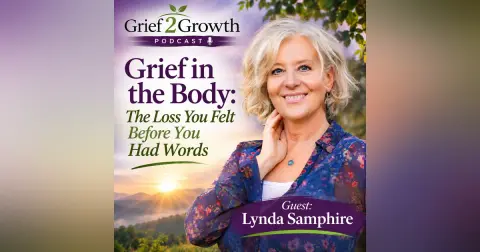
Have you ever felt grief in your body that you couldn't trace back to a single moment? Lynda Samphire was two years old when she lost her mother. She was too young to have words for what happened, but not too young for her nervous system to remember it. In this episode, Lynda shares how that early, unrecognized grief shaped her relationships, her career, and her sense of never being enough. She also shares what finally helped her feel it, move it, and come home to herself. If you notice gri...

 Apple Podcasts

 Spotify

 Castro

 RSS Feed
Have you ever felt grief in your body that you couldn't trace back to a single moment?
Lynda Samphire was two years old when she lost her mother. She was too young to have words for what happened, but not too young for her nervous system to remember it. In this episode, Lynda shares how that early, unrecognized grief shaped her relationships, her career, and her sense of never being enough. She also shares what finally helped her feel it, move it, and come home to herself.
If you notice grief in your body, in your sleep, or in your dreams and wonder what it means, this conversation is for you.
In this episode, you'll hear:
🌱 How loss that isn't recognized moves into the body, the nervous system, and the way you sleep and dream
🌱 Why Lynda believes we need to regulate before we try to heal, and why so many of us try to do it backwards
🌱 How gentle microdosing of plant medicine supported her grief process rather than replacing it, and why she believes less is more
🌱 The illusion of guilt, and why a child (or an adult) can feel guilty about a loss that was never their fault
🌱 The turning point Lynda reached when she let herself simply feel what she had been holding back
🌱 How grief shows up beyond death, in the loss of a home, a job, a relationship, an identity, or the way the world used to be
🌱 Practical tools for moving grief through the body, from yin yoga and walking in nature to showering at night
🌱 How dreams can be a language grief uses to speak to you, including visits from loved ones
🌱 What inner authority looks like, and how to begin trusting yourself again
About Lynda Samphire
Lynda is an intuitive and transformational guide who helps people gently regulate their nervous system, reconnect with their own inner power, and rebuild trust with their intuitive intelligence. She works with the whole cycle of a person's life, waking and sleeping, through daily practice, dream work, and intentional microdosing with plant medicine.
Connect with Lynda:
🌐 Website: https://lwsamphire.com
Lynda offers a free 15-20 minute consult. You can reach her through the contact button on her website.
Please note: This episode shares personal experiences and is for educational purposes only. It is not medical advice. Please talk with a qualified professional before making changes to your care, especially if you take any medications.
💬 What resonated with you?
Has grief ever shown up in your body or your dreams in a way you couldn't explain? What does your body do when it needs to let something move? I'd love to hear your thoughts. Join the conversation on the companion article at grief2growth.substack.com, where you can comment and connect with me and with other listeners.
💛 If this conversation helped you, please share it with someone who might need it, and leave a rating or review so more people can find the show.
Stay connected with Grief 2 Growth:
🔔 Subscribe: grief2growth.substack.com
🔗 All my links: https://pages.grief2growth.com/profile
📰 Email list: https://pages.grief2growth.com/join-the-club
⏰ Free consult: https://grief2growth.as.me/30-minute-consult
Approve or adjust, and I'll move on to the blog article outline (Step 5).
Visit https://grief2growth.com/oracle to learn more about how to create a connection with your loved one on your phone.
Visit https://griefg2growth.com/song to learn more about creating a legacy song for someone living or passed on.
Want to go deeper? My Substack is where I share solo essays on grief, consciousness, and continuing bonds — thoughts that don't always make it into the podcast. It's also home to a community of listeners who get it, because they're living it too. Free to subscribe. Find it at substack.com/grief2growth.
You've been listening. You're doing the work. But there's still this feeling that you're circling the same place.
Maybe you've thought about working with me one-on-one. Maybe something's held you back.
I get that. And I want you to know there's still a place for you.
All of it, pay what you want. You decide what it's worth. Nobody gets turned away because of money.
🧑🏿🤝🧑🏻 Join me on Substack- connect with others and me
👛 Subscribe to Grief 2 Growth Premium (bonus episodes)
📰 Get A Free Gift
📅 Book A Complimentary Discovery Call
📈 Leave A Review
Thanks so much for your support
Close your eyes and imagine. What if the things in life that caused us the greatest pain, the things that bring us grief, are challenges. Challenges designed to help us grow to ultimately become what we were always meant to be. We feel like we've been buried, but what if, like a seed, we've been planted? And having been planted, we grow to become a mighty tree. Now, open your eyes. Open your eyes to this way of viewing life. Come with me as we explore your true, infinite, eternal nature. This is Grief to Growth and I am your host, Brian Smith. Hi there, welcome to Grief to Growth. I'm Brian. If this is your first time here, I'm glad you found your way to this conversation. This shows about making sense of life, especially when life doesn't make sense. We talk about grief, loss, and the questions to keep you up at night. Who are you? Where do you go when you die? And is it possible that the people you've lost are closer than you think? I bring on guests to help illuminate the path, no matter how dark it feels for you right now. Linda Samfire was two years old when she lost her mother. Too young to have words for what happened, but not too young for a nervous system to remember it. That early unrecognizable, that early unrecognized grief became the doorway in everything she does now. Linda is an intuitive and transformational guide who helps people gently regulate their nervous system, reconnect with their own inner power, and rebuild trust with their intuitive intelligence. Working with the whole cycle of person's life, waking and sleeping through daily practice, dream work, and intentional microdosing with plant medicine. In this episode, you're gonna sit with something you may carry, but may have never quite named. The grief that happened to you before you had the words for it. Linda talks about how loss that isn't recognized doesn't just disappear. It moves up into the body, into the nervous system, into the way you sleep and dream for decades afterward. You'll hear what it actually means to regulate before you try to heal, and why so many of us try to do it backwards. And now something as gentle as microdosing plant medicine can support the process rather than replace it. You'll hear about sleep disruption after loss, and about dreams. Not as random noise, but as a language of grief may still be trying to use to speak to you. And you'll hear what it looks like to move from an unrecognizable wound, all the way to what Linda calls inner authority, learning again how to receive life. So if you've ever felt the grief in your body that you can't quite trace back to a single moment. If you notice your sleep or your dreams shift after a loss and wonder what that meant, this one's for you. And if you want to continue this conversation after the episode, head over to grief2growth.substack.com and you'll find an article there about today's discussion where you can comment and connect with me and with other listeners. So with that, let's get started and welcome Linda Samfire. Thank you, Brian. I'm excited to be here and have this conversation. Yeah, I've been really excited about having this conversation as well. There's a lot of things that we're going to touch on today that I'm really interested in talking about. But your loss, loss of your mother at the age of two, when did that grief show up in your life? You know, it's interesting. I think it showed up immediately. I just didn't recognize it till later on. You know, the grief began before I had language for it. So two years old, I didn't have that that conscious story of that loss. However, my body carried that absence. I became really skilled at kind of reading people, reading the room. And once I understood as a sensitivity, I later recognized it as my nervous system, really going into that fight or flight and protecting. It showed up in areas of like that not enoughness at age two. And it's just not age two at any age as a child, especially when we lose a parent. I know for myself, there was the why did she leave? What did I do wrong? That not enoughness and really always going into that pleasing mode then. And that was to soothe my nervous system. So always searching and making sure that I had control of my outer world and that would show up in many different behaviors and eventually looking at really functioning anxiety and functioning depression underneath the surface. Not enough to where I felt like I ever went to a psychiatrist and I was put on SSRIs or anti anxieties. It was always just I just thought that was normal and that's how we live. But it was very uncomfortable and it led me to, you know, it defined my relationships, it defined my career, it defined all these ways. And it really wasn't until I connected spiritually. And all along the time, which I didn't recognize, my dreams were really, really speaking to me. I'd always been a very vivid dreamer. So it was then an opening that portal that really I started to soothe and realize that I'd been grieving for a lifetime. But my my perception of grief was different than what was actually happening in the body. Yeah. Yeah. So I would imagine that you probably don't remember the event of your mother passing or do you? No, no, not at all. I mean, I can have little I'll have little glips of, you know, being in my room, calling for my mother, things like that. I used to, it was funny when I was growing up, if I ever took a nap, I would wake up in anxiety mode. And I would need to comfort it with like chocolate or something. And it was just this constant. I remember asking the mother, my father, a married mother who raised me what I was doing. Right before I found out my mother had passed and I was taking a nap because I think you just woken up from a nap. So and she had passed an epileptic attack. We were not home at the time and came home to it. And my father put us all down for naps. And then, yeah. Yeah. Yeah. So you had this this kind of great or anxiety and maybe depression or something, you know, for your life, you thought that was just normal. When exactly did you tie that to the grief of losing your mother? Well, it's it's really when I started working with plant medicine that opened up those portals. And I remember I worked with a beautiful guy, a medicine woman, and she asked me what I was feeling. And I said, I'm feeling this. This my personal power, my upper stomach, just this freneticness. And she says, what does it feel like? And I said, feels like anxiety, I guess. And she said, how long have you had it? I said, almost all my life. And I couldn't remember back to when I didn't feel that it had so normalized in my body. And the more work I did, I realized I needed to grieve the loss of her and the guilt that I felt, the illusion of guilt that I felt for. Did I do something wrong? And all of that and really caring for that inner child that had always been searching for love. Yeah, yeah, yeah. So the plant medicine sounds like it kind of helped you process it. So explain to people what plant medicine is and how did you use it? Well, plant medicine is in the psychedelic world is what I chose as my area, my path. And I started with psilocybin. I worked with aminita muscaria for the nervous system. And then I worked with a very powerful one called five amino DMT. And what the medicine did is it didn't take care of my grief. It shifted my perspective of life and death and that deeper transformation then began developing and created enough safety for my nervous system to begin to explore it. And I really started looking at that until our nervous system is feeling soothed and safe enough to explore. It's the sustainability of letting grief flow through you as one of our human experiences was not happening for me. Yeah, yeah, yeah. It just felt too uncomfortable. And you used micro dosing with plant medicine, is that correct? Yes, I did. I used micro dosing and I mean, I have had peak experiences. However, I feel that I feel that less is more with these. Again, this isn't to fix it or heal it. It's opening a space, helping soothe our nervous system, repattern so that we do feel safe enough to explore ourselves. Yeah, that's really interesting. I know a lot of people have heard and it's becoming more common, I guess, for people who use plant medicines, as you said, psilocybin and some others to actually like trip, you know, to have that experience, but micro dosing is something I've only been hearing about relatively recently, where it's taking a dose that where I guess you don't really feel it and you don't really have a, as you said, a peak experience. No, I, anybody I work with, I prefer the low doses. I think they're way more powerful. I feel like if our bodies and our nervous systems are hit too hard with something, it can cause us to close back up again, where it can be kind of scary where, you know, we come up against fear where the low doses are very gentle and they're a gentle opening and gentle guidance with a good container of an integration guide to help move through what's coming up. So we start micro dosing and possibly we start feeling anger and it's it's kind of knocking on that door. Are you ready to explore this? And then being, you know, bringing in the compassion for that emotion. So we begin to learn how to feel and so there can be tears. There can be laughter that can be feeling really good. There can be being tired and there's no really right or wrong. However, it helps move us through it in a real gentle, loving way rather than just kind of blasting us open. And I mean, there's a lot of fear around psychedelics and I mean, there's this the space where it helps unite us and help us remember our own inner intelligence. However, doing that as we allow things to unfold rather than just rolling the carpet out all at once. Yeah, I remember hearing about ayahuasca many, many years ago, a guy who had done that and that's that's anything but a general awakening. And I'm kind of a fearful person anyway. So I'm like, I feel like I'd be the guy that has a bad trip, you know, and I don't want to I don't want to experience that. And I have a friend that did do ayahuasca and she's got anxiety like I like I've had. And I said, Well, I'd be afraid of having a panic attack. She said, Oh, I did have a panic attack. And for anybody who's ever had a panic attack, that's the last thing you ever want to have experience again. Yeah, I've never worked with ayahuasca. It's the one medicine I've never been drawn to. I work with one medicine that I love for nervous system support, which is so powerful right now, because everything's in chaos around us. It's called omni timestaria. So it's that red and white mushroom. Yeah, and it gets kind of a bad rap, like she's poisonous. She's not prepared properly and, and sourced properly works. Unlike psychedelics that work with our serotonin. She works with our GABA receptors. So the GABA the glutamate system of the brain, that's our on off switch. And most of us are kind of walking around with our on switch on constantly, the gas pedal down. And that's going to present it's going to prevent sleep. It's going to create that frenetic feeling inside panic attacks. I'm Anita is agonist agaba, the musculable in it. So the brain grabs it as this as if it is moves down or central nervous system brings in this very soothing moving us from sympathetic to parasympathetic. This overall calming, not sedated, not loopy or out of it, helps with those ruminating thoughts that we're in brings in more focus, more creativity. And I feel she restores the system so that if we're ready, we can if we choose to, we can move into them like psilocybin on a gentle, a gentle dose and moving into that. So I like to start people on that. And I have had I've worked with hundreds of people with amanita. And I am just in awe of the results that come through people begin sleeping again, they begin dreaming again, because the REM is coming back in. They're going into meetings saying I just felt so calm. And I felt like me again. So it's really that I feel the nervous system is where we look first. And then then we can move into more of the psychedelics if we're really in that place of where the nervous system feels very frenetic. Yeah, well, I think I think a lot of us are I know that I feel like I have been for probably most of my life. And I remember going to see a therapist when I was in my mid 30s. And, you know, just never having that feeling of like, you know, calm, as you talked about, it's something that I think a lot of us feel like you always kind of on edge and not necessarily knowing why. I know you talk about, you know, us being dysregulated and we're dealing with grief and being dysregulated, trying to get the right order as to how we go after, you know, those two things. And I think you said a lot of times we do it in the wrong order. Yeah, I mean, I always like to look at things as no right and wrong, but we might hit this path and it may not be sustainable because it's too much for the body. Right. So micro dosing, first, is very sub perceptual, and especially alma mater. When I began micro dosing alma mater, it wasn't till like three days later, I realized I'm like, oh, I've been so creative the last few days. I felt very calm. And like, this is this is what it feels like when your central nervous system is soothed. And like, I look at the central nervous system is kind of the airport control tower, right? If that's working well, lanes are landing, things are moving. If it's not, it's chaos. And so I think keeping in mind that the lower doses, we want it to be sub perceptual in both cases of like psilocybin and alma mater. Yeah. Yeah, I actually had Casey Garrett on my program before. I don't know if you're familiar with her, but she's very familiar with Casey. Yeah, her and I work together. Okay. Yeah. So she, you know, that's why I've talked to her about micro dosing. I have a client that has actually tried it. And so I'm like, my client was kind of like picking her brain, like what was it like? What did you know? What'd you feel? And she said, you don't really feel anything. But then after a month or so, she's like, she felt like she was getting to parts of her grief that she hadn't gotten to before. Yeah. And for me, it showed up as being really tired. And because the first month I started micro dosing, I felt really good. I was feeling really great. And then all of a sudden I got really tired and it helped me realize how much our bodies hold onto and how much energy it takes to not allow that energy of grief and guilt and everything and sorrow and sadness to flow. I started having to take naps. And then the tears came. And I remember thinking, my first year on plant medicine, I'm like, am I ever going to stop crying? I mean, there was a lot that needed to, to move through. And I remember just hearing like, this is just energy moving through your eyes. Just let it, let it flow, let it move. And so it is a process. It's not an overnight. It is not a fixing. I look at it as bringing us back to who we are, remembering and being fully aligned so that we begin remembering what it why we're here, what we're meant to do or being human. Yeah. Yeah. It is it summits really quick others it can it can take it's an unfolding. Yeah. And it's interesting that you bring up guilt because I work a lot with parents who have lost children. And I found it's almost universal if a parent loses a child. And it doesn't matter how they pass. There's some guilt. But I've also as I work with other people, there's there's a lot of times there's this guilt component to grief. And in your case, you were two years old when your mother passed away. So objectively speaking, there's definitely no fault of your own in there. But there's that feeling of guilt that you experienced anyway. Yes, right. And I think I refer to it as the illusion of guilt. Yes, yeah. Yeah. I mean, because it's like, obviously, I didn't do anything wrong. But as a two year old, your mother's just gone. Why did she leave? Did I need to be better? Did I do something wrong? And it's not that those were the words running through my thoughts, though possibly it could have been at that age. However, there was a there was a guilt and that showed up in my dreams. Like I would have these dreams where I'd be doing something and I would feel very guilty about what I was doing in in the dream. And so it would show up in ways where that would be the energy that I'd feel. Yeah. Yeah. And then of course, you question yourself through life, like, is this the right choice? So indecisive, I'm making the right choices. And then that moment, you hit where you do something and somebody doesn't like you make a choice and they don't agree with it. Then there's that, oh, I did something wrong. I shouldn't have made that choice. There's like guilty, this person's mad at me. And it was very, very difficult. I couldn't handle people being upset with me. Like I would feel very guilty. What did I do? My nervous system would come into that fawn. And so though the guilt was not necessarily justified, it was very justified in my body. And it was, it was something that, because I was like, how can I have all this energy of guilt? I've never really done anything horrible. But I don't know, maybe didn't get the right grade on a paper in a school. And I should have studied harder. It's all my fault. And we take it on as my own. So those kinds of things come up in dreams. And they speak through the symbols. And that's how I really started working through guilt. And even today, if I have a dream where there's guilt coming up, I know that that's just still moving through it. More processing. Yeah. Yeah. Yeah. So I think it comes to this point where you recognize it, welcome it and have compassion for it. And then, because I mean, it's a human emotion. Yeah. And I really wanted to, I'm really glad we brought that up. Because as I said, as I've worked with so many people, it's almost universal. And so I want people that are listening to know, if you do have that feeling of guilt, even though it may not be a conscious thing, like you blame yourself because you weren't, but there is that feeling that seems to be that come up comes along with grief, that a lot of times people really don't understand or know how to process or maybe not even put our fingers on it. Right. Right. Yeah, it was guilt. Why didn't do anything wrong? Why should I feel guilty? However, in the subconscious, deep inside there, something got triggered. As a child, I mean, it makes sense when you think of it logically, like, well, my mom's gone. And they could, you know, they might say, Oh, your mom went to heaven. Well, that could be the grocery store. And she just never came back. And so it would seem probable that I might go, I wonder what I did. Yeah, yeah. Yeah. So yeah, I think it's, it's, it's really important that we try to, you know, to feel those feelings, even though they may not feel like they're, they're, they're logical, because feelings are just feelings. And I think a lot of times, you know, and again, I was thinking about my client who started in plant medicine after almost two years after, after her loss, and was doing really, really, really well with the processing, your grief and everything. But she said she felt like it just made her, yes, maybe go to a different level. And she said there are things that she just didn't know she was there were still there. And they started, they started coming up. And like you said, the tears started coming. It's like, where are these coming from? Yeah. And isn't it interesting to how we like, have to put a reason to the tears rather than the the words I heard, were just just it's just energy that's been kind of ruminating inside that is now moving out the eyes, and just let it flow. There, there was one moment through my work with plant medicine on with myself, that I really hit this space of deep release. It was like the depths of darkness for me, I think I was sitting on the floor. And there was this, I swear, as every single feeling you could think of was moving through me. And I was looking outside and I was like, I don't know what to do this, like there was just so much moving, it was overwhelming. And I remember thinking, I'm like, death will not even get me out of this. And my body stopped at that moment was like, there's no way out of this. And it was it was very, very uncomfortable. And I'm just like, what do I do? And I heard the words, just feel it. Just allow yourself to feel it, allow it to move. And my body started tingling and vibrating. And I started to feel not amazing, he means, but yet, hope. And from that point forward, that was the climb back upwards for me. And that, I believe was opened because of the medicine. And I had a container, a guide that could help me unfold all this and work with all this, and normalize it and give me permission to give myself permission to just be that messiness that we work through. And so the medicines, again, they open and they bring the opportunity for us to connect. And then it was that complete spiritual opening I had, that really brought it in because I was always down the rabbit hole of consciousness and death. And why are we here? So it was a very, very powerful moment. And I do attribute it to micro dosing and using the medicines and a really, really good guide. And it's funny now, when those feelings come up, because I'm not gonna say, you know, when we lose someone, and I can't imagine losing a child, it shifts who we are, it changes us, and it shifts us. And it's not like those feelings don't come up. However, how it moves through our body, we know how to move it. We give ourselves permission to maybe be sad today and allow this to move through. We're not in resistance. So when the body goes into that resistance and judgment of it, that feels like a war inside. So we give ourselves permission to just have a day or an hour or a week of just being this. And this is what I need to be. Yeah. And I think, you know, and I think I know this, we all, whether we've lost a person or not, we all go through grief. There's an angst, I think, just about being human. We all go through losses, we all go through disappointment. So a lot of people, I think, can relate to our conversation. If you may not have lost a person, you might relate to these feelings of like, not feeling like you're enough, always trying to please other people, feeling like, you know, something's just, something's wrong. And then a lot of times we turn that in on ourselves and say, well, there's something wrong with me. And I would say that most of us do that. Yeah. Yeah. And I mean, the loss of my animals, which then triggered the original loss. I just moved from a home after living there for 20 years. That was grief. Yeah. Yeah, exactly. A job, a loss of a relationship. I mean, there's so much. It's just not the death of a person. I mean, it's the one thing we all do have in common, right? And just lost my father a little over a year ago. And yeah, so it's about really, and then my stepfather just recently too. So we have to give ourselves, there's no time limit. Like people ask, well, how long does this take? And again, I think when somebody transitions, passes, regardless of who it is, it shifts and changes who we are as an individual. And we begin becoming a new version of ourselves. And that can then shift our identity. And that one's difficult, right? So there's the grieving and loss of an old identity into a new one. And that feels uncomfortable. So there's a lot happening other than just the loss of the person that can always be the catalyst that starts shifting. Yeah, that's a good point. But I was thinking about, there's a song I love that talks about how we come in, basically, we were innocent. It's by Earth, Wind and Fire is called That's the Way of the World. And the song talks about that at the initial moment, I was giving a presentation at a conference a week ago. And I asked people in the audience, how many of you felt like, you know, have always felt like you never belonged here? And like, 75% of the people in the room probably raised their hands. So there's that thing about, you know, like you talked about spirituality, people come in and are like, there's something just wrong with the world. And I remember feeling that when I was, I remember feeling that at five or six years old that like, I there's something wrong with this place. I grew up during the Vietnam War. So I think a lot of us feel like there's just something off about everything you talked about everything that's going on right now. So again, if someone if you haven't lost a person, you might still be going through some form of grief. Yeah, maybe we're grieving the way the world used to be. Yeah, maybe we're grieving a childhood memory that that brings in I mean, there's grief is a human emotion. And you're right when you we can we can move through it, but then we might like, shove it off as well, they didn't die. So is that grief, right? We kind of pass it off. But when you said that not belonging, oh, I always felt that way. I might even feel that way today sometimes. I think that it's like, to me, what that always told me was there was such a disconnect from myself, that I was spending so much time looking outside of myself to belong. And that created the unbelonging rather than coming here. And that's what dream work does. That's what plant medicine does. It brings us back to remembering connecting and aligning with ourselves. Then there's that sense of belonging. And that's really what we're feeling. I think in Buddhism, they will say that there's all these aspects of us floating around. And until we bring them in, we are not whole. And so it's coming back to that space of wholeness. And that means that we have to move through these challenging, uncomfortable feelings. And remember who we are. Yeah, so many of us, we don't, of course, no one likes to feel uncomfortable, right? But because it feels uncomfortable, we just stuff them down. And we say, I'm just going to acknowledge it. I'm not going to acknowledge the anger that I'm feeling or whatever it is. And we hope it just goes away. And it just doesn't, it sits there. Yeah, yeah. And that's resistance. Right. And when the body's in resistance, it's a war. Yeah. And that's that feeling that we that you talked about, we have that feeling that's like there's constant turning or burning or whatever that that we can't really get to and address. And, you know, when people go through grief, getting back to the regulation thing, we can become so dysregulated, our sleep gets off. So we can't fully really process all these feelings into the process because our bodies are just out of whack. Most definitely. And just to it's like that functioning anxiety ahead is exactly what you're explaining right there. And it was the resistance. And what I learned through a lot of my work in the healing arts, and then also with the plant medicine is coming into allowance. And that shift between just allowing it to flow. And then the awareness was the healing. So I didn't have to do a lot of work in that aspect of it. Like I didn't need to go in and figure out why so much I was feeling that way, excavate the story, heal from it. It was more just the awareness of I'm holding this in my body and my body's telling me this needs to move. One of the biggest modalities I used to it was yin yoga, where we sit in those, those positions that are uncomfortable for a longer time. Because when we're uncomfortable, we want to run. And it really taught me to just stay and breathe through it and move through it. So I worked with my body on training, training and I guess we could say, how to just sit in the uncomfortable how to allow it. And there was times in some of those positions, I just wanted to shake and so I would write I just let my body shake because it was moving. And the more we begin listening to the guidance within my foot wants to shake, okay, well, I'm just gonna allow it to do that, rather than going what's wrong with me? Why do I feel this way? And that's really what sitting in those for me, those yoga moves, right, that did for me, is kind of taught me how to move through the uncomfortable that the plant medicine was kind of guiding me and showing me. Yeah. So you mentioned the yoga that you're doing, are there other modalities that you've found have been effective? Yeah, and I think that's a good good thing to bring up right because I think we each have our own little tool bag. I know I do. And so for me, walking outside is huge movement is huge for me. So I need to move it, I either need to do some yin yoga, like I kind of let my body tell me what it wants to do. And then sometimes it's jumping on the peloton with some big cardio that can kind of, and it shifts everything. And I stopped really going, why am I feeling this way? What's wrong? And I just said, okay, my body's telling me it wants to move. It either wants to walk, it wants to be in nature, it wants to peloton, it wants to yoga, it wants to breathe, or maybe it just, I just need to take a nap. And then I also started working really deeply with my dream state at the same time. So that's kind of my tool bag. One of the biggest things that also that became huge for me is I have to shower at night. I needed to just I'm very sensitive, a lot of stuff runs through me. And I just needed to wash it off at the end of the day. And it shifted, it shifts everything for me. Yeah, and allows me to set up for sleep. That's really interesting. My daughter is very intuitive. And she likes to shower at night. Yeah. Yeah. Okay, maybe set. Yeah, that's it's always, I cannot tell you last time I just showered at night. Well, she's got a really, really heavy job. She's a she's a therapist, mental therapist. Okay, yeah. So she's got a heavy job. And so maybe that's maybe that's why she does that just kind of there's something about rinsing the day off. Yeah, I speak with people all the time, right, working with this kind of stuff. And at the end of the day, I just need to rinse it off. And I'm very sensitive and intuitive. So yeah. So you're a intuitive and transformational coach. What is what does that mean? I bring into well, I'm bottom line is we're working with transformation, you know, bringing into a new version of ourselves, connecting to our own inner wisdom, our inner self, our most powerful self. And I bring in my own intuition on that I have the ability to really feel what a person is beneath the surface beneath the core, their gifts. And just kind of bringing that forward without telling them this is who you are, like the ability to bring that forward so that it unfolds in a way that they are able to connect with. And normally, it's very validating. Like they already knew it. So really, I'm just sharing what they already know. Yeah, yeah, that makes sense. Yeah. And so many will say, you just pulled out every thought out of my head. Yeah, that kind of so I work in that capacity. Yeah, I you know, it's funny, because the older I get the more realize most of the answers that we seek are already inside of us, the people we don't trust ourselves. So whether it's going to an intuitive coach, or going to a medium or going to a psychic, or whatever it might happen to it's hearing, it's hearing someone else say what we already know. Definitely. Yeah, because I mean, we're kind of taught to outsource. Yeah. And I have to say that I was one of those people that outsourced everything. And it's it's interesting, there's this sovereignty that comes in. When your mind starts to go to outsource, and then it doesn't feel right. And either I'm taking it into my dreams that night, or I'm sitting in meditation asking myself, and letting that answer unfold. Yeah, not that I still don't, you know, have a reading here and there. But it's not like serial readings. Yeah. However, there's a sovereignty in that, like, well, just go inward. And, and that's the, that's what we begin trusting in ourselves, where we're we're out of the pleasing, we're out of the not enoughness, and the self doubt, and all of that has moved through. And there's this profound trust in ourselves. And that's sovereignty. Yeah, well, I think for for most of us, many of us, the the world, the society, everything has taught us don't trust yourself. And I know I was specifically taught that the religion that I grew up in, it was like, you're, you're the original sin, you were born, you were born in sin. And there's a famous verse in the Bible about the heart is evil above all things, or something like that. So you're taught, okay, if it comes from within you, if it comes from your heart, then don't trust it, you've got to trust, you know, whatever the pastor, the Bible, the whatever. And we're taught, you know, the government or whatever it is, there's always an authority figure outside of ourselves. So we hear to trust yourselves, it's almost blasphemous. All right, we just had a little technical glitches, Linda, I was saying, sometimes you start talking about intuition and spirit, and these things kind of happen. So it was weird, I could I could hear and see you, but you couldn't hear or see me, I guess. But we were talking about the fact that, you know, learning to try learning to trust ourselves again, I guess I would say, because a lot of us have been taught to outsource our trust to outside forces, whether that be religion, whether that be the government, whether that be medical professionals, whatever it is. And even so far as to say anything that comes from within you is must be wrong. I think a lot of us still kind of carry that. So what you're talking about is, you know, learning to find the answers within even as an intuitive guide and transformational guide, you know, you a lot of times what you say to people, they already know you just just validating it for them. Most definitely, and I can so relate to what you're saying about the trust within and how we don't trust ourselves. And it's interesting, it's such a subtle shift. It's not like you wake up one day and all you trust yourself, like it's such this, this subtle shift that comes in and the intuition comes back online. Hmm. Our dreams wake up more, we begin, we begin receiving messages in a sense and guidance. And then it unfolds and shows up in our waking state. And then that's the validation. And that slowly, we begin to start trusting ourselves. And that's one of the things that micro dosing really helped me with and open that up. But I mean, I really can't explain how powerful it is and how empowerment we, you know, empowered we feel just from trusting within and trusting ourselves and listening to our gut and, you know, I had this gut feeling, however, didn't act on it. And so I think that, you know, we're all we're all we all have it, we all have that. And it's innate to us. And it's all of our superpowers. We've just kind of been taught not to look at here, but to look at to outsource everything. And you're right. And you said like the government and our relationships and our jobs and everything in that in that sector. Yeah, well, it's I mean, I think about this a lot. It's like, you know, socialization is important. We need to people have to be for us to get along as as as human beings, we have to be socialized, we have to we have to have norms and stuff like that. But it goes too far in many cases. And it does disempower us as individuals. And I think that's a big part of what we feel like we've all lost that that's that angst that we feel that like, I'm just not good enough and not really, you know, outsourcing everything that just doesn't feel right. It doesn't seem like it doesn't it just doesn't feel empowering, as you said, I guess is the best way to put it. No, and it's yeah, and you're right. We all have these agreements of how we're going to converse and move and work with one another. But there's the disempowerment of always counting on that and always looking at that. So then how, how do we share ourselves with the world become vulnerable where our power is and feel safe? Right. And so just because I say something that I've experienced is this doesn't make it wrong. It doesn't make it right. However, it will bring forward those who agree and those who don't and that's fine. Because we're all here as these having these individual experiences, I think too that, you know, we talk about conditions, I think that we there are some conditions that are kind of our pillars and keep us feeling safe. And we get to choose what that is, we get to choose those beliefs and thoughts that feel good. It might feel good if the belief is, I need to work for somebody else. And that's where I feel safe. That's okay. Yeah. Or it might feel that no, I don't want to work for some it's I want to be an entrepreneur. Like there's no wrong or right here, you get to choose on those agreements, what you want to outsource what you don't want to outsource. Yeah. Yeah. I love what you said about there's no wrong or right here. Because when I was a kid, I mean, I was like, there's got to be a right answer for everything. That's why I went into engineering, because I like engineering, because it's like, there's a right answer, the wrong answer, you can you can calculate, you can figure it out. But I remember when I thought about I always, I never liked working for other people. But my whole family, that's like, that's what we always did. My my father was, you know, coming out of school in like the 50s, and being an African American, getting a job was difficult, you know, because a lot of industries wouldn't hire you is interesting, particularly in accounting. So the government he worked for the government. So my family, their thing is like work for a big company work for the government, they'll take care of you. And I did that for a long time. And I remember when I decided to start my own business, my parents were like, why would anybody want to start your own business, that's, that's just not the way to do it. And I had to really, you know, fight that that program that I had this like, that was safe working for somebody else. That was a big one for me too. I mean, it's really difficult to be an entrepreneur. It's, you know, and I came from a similar family, it's interesting, my father law is an engineer. And my member, my father would always say there's a wrong and there's a right way. And so there's a there is a bit of a deconditioning when it comes to well, I really want to be an entrepreneur. The interesting part was my father was an entrepreneur from the age of he was 55 on and had worked for the government prior to that. But yet had always told me it's really hard to be your own boss and be an entrepreneur. Hard to do this. So I had to work through all that and shift that. Yeah, yes. And so that that right or wrong answer thing, it's been I'm 65 now. And I'm just really trying to learn to trust my intuition even now, because I still like I'll agonize over answer. I will I mean, just buying a refrigerator or dishwasher or whatever, I will research it to death, you know, because I want to buy the right one. And I actually went through that whole process and about a washing machine. I hated it. So the next time I decided about I was like, I'm just gonna pick one and buy it. And it's been great. So again, it's a deprogramming of you got to go through this process. Sometimes it's just like, I tell people not just make a decision and go go for whatever decision you make, it's the right one. And just just make the decision and trust is the right one. Yeah, isn't that? That's interesting. That all the time spent on researching, I used to do that too. And now I just I just buy it drives my husband crazy. I'm just I'm just despite this. Yeah. Yeah, that trust comes in. Yeah. And it I remember my transpersonal hypnotherapy teacher, instructor, he always said, there is no wrong or right. There's just outcomes. And that's how you know which path to take the outcome feels good, keep going if it doesn't shift over here. Just don't get caught up in that. Well, that was the wrong decision, because that's where we can then get kind of ruminating and stuck. Right. But so I always I always get carried that forward and always with my clients and I work, there's no right or wrong, there's just going to be an outcome. And that's the duality of life, because how do we know what we do want if we don't experience what we don't want? Now you know, what kind of washer dryer you don't want. Right? Yeah. And so that is how we work in this realm. It's a it's a duality. There's always this and there's always that thank goodness, right? So when it comes to choosing, that's where that's where the power of really feeling it in the body. And I believe this is where micro dosing really helps bring this forward, is we begin feeling, well, this feels right, instead of going, what if it's the wrong choice? What if the job isn't right for me, it's going to bring something and there's going to be an outcome and then you can shift we get caught up in wasting time. But I really do not look at choices as they're being the wrong or right one. Yeah, I agree. And again, even with outcomes, I mean, first of all, we don't we don't have a we don't know what the future is going to hold. So we don't know which with this path is going to lead to that. So I tell people don't feel guilty about the choice you made, because you made the best choice you could with what you knew at the time. The other thing is a lot of times what we feel is a quote, a bad outcome turns out to be a good outcome, you know, later on. So we judge the outcome or we judge ourselves based on the outcome. And you know, going back to the grief thing, and I've seen this so many times, you know, you lose someone, why I should have done this, I should have made him go to the doctor, I shouldn't have let her go to the prom, you know, whatever it happens to be, judging ourselves based on the outcome, as opposed to saying, I made the right decision at the time. And that's what I truly believe now, whatever decisions you make right now, is the right one at the time. Yeah, well said, because I mean, we're all here on our own paths, right? And we're not here to impede on other people's paths. And so, for whatever reason that goes, I think, beyond answers, this is how it played out. And we're so much in charge of ourselves, but yet we want to take the responsibility for other people's choices and other people's outcomes. And that's kind of that dog chasing the tail of the circle. And so, yes, and then you're looking at guilt. And I feel guilt is one of the most difficult energies that can really make our bodies sick. And so it's really, you know, worth working through and, you know, observing. Yeah, absolutely. I agree with that. So, Linda, when people come to you, and I know you do, you coach people on microdosing and also transformational and intuition. So, how do you decide? How do you say, okay, this person, you should microdose, or this person, I think microdosing might work for you. How do you decide where to start someone? That's a really good question. So, normally, well, in all of my appointments, we do start working with our sleep state and the dream state. We start, that's going to be, come into play, because I feel that that's a part of bringing us whole. Normally, people begin, not that people come to me are pretty curious about microdosing, though there is work without microdosing, and we can move into it. I like to, I know I started on Amanita, get that nervous system restored, repatterned a little bit. I look at her as we kind of tilling the field before we aerate it. And so, we might start him on Amanita and then move into psilocybin. If they choose, some people just feel great after Amanita, and they're like, feel good, and they're good. Others like to move on to the psilocybin and do a little bit more deeper work. So, it really, one, is the individual's choice where they're at. There might be fear around, which, of course, I had fear when I started psychedelics. So, maybe we need to just do some work and use the dream world, the medicine of the, I look at that as the number one medicine, sleep and dreams. Then, maybe we move into that. So, it's really an individual choice on where we're at. I think what we're looking at is what's the outcome, or what are we looking for? Are we looking for to feel more grounded in life? Are we looking to explore consciousness and open spirituality and intuition? I work with a lot of people who just want to open their creativity and imagination and move into that. Or are we working with grief and loss? Maybe sometimes, if feeling too much can stop us from that, we might start more in the dream and then move into the medicine. Where's the person at? What's going on in their life? Is it chaos in their life? That may not be the best time to start medicine. Do they have space? A lot of us ride in victimhood. I did for years. Are they willing to come out of that? That's part of the outsourcing and really begin looking within. So, that's how we determine, at least I do, on whether they're the plant medicine. We also want to look to if they're on any pharmaceuticals that need to be looked at first before moving into the medicine. So, we talked a lot about the medicines, but we haven't talked a lot about the dream and sleep work. So, let's talk more about that. I would love to, yeah. So, Carl Jung always said that the two pathways to the soul are dreams and imagination and they're both areas that we don't use and work with as much, however, so powerful. So, let's say for me, I had many dreams of my mother when I was kind of visitations from her and that actually really helped. And when a loved one is visiting, and I've had that with clients before too, especially when they start microdosing, that all of a sudden, their dreams are coming back online because they're sleeping more. The nervous system is soothing some and the dreams start coming in and then they might dream of their father, their child will come through, or they can speak to us through maybe the home. You might have the home you were in together, but I had picked a dream of my old home when I was a little girl before my mother died, where we lived, things like that. And that's how you know they're coming through. It's not about running to the dream dictionary and figuring it all out. It's really about what are we feeling? What's the feeling from that symbol that's wanting to move through? If I have a red ball in my dream and you have a red ball in your dream, and you remember being on the beach one time playing with a red beach ball, and I remember getting hit in the face with a red ball, they're going to be different meanings. So it's not universal. So our dreams speak to us in symbols. We like to take those symbols, I do, and work through the feeling. What's it feel like when that runs through the body? What's moving through? What's the connection to the soul? And then we might incubate that in the next, you know, going forward, get a little more clarity on this. So what's the language of our own soul? What's the language of our own spirit? Yeah, that's really fascinating to me. Dreams are, I have very vivid dreams and they're crazy. So, you know, it's always like, okay, what does this actually mean? But then I also talk to people and say that they don't have vivid dreams, or they don't remember their dreams. There's a lot of people, or actually people say, I don't dream. And I'm like, yeah, you do dream, you just don't remember them. You just don't remember. It's a muscle, you know, it's a muscle. And I think that I worked within African Sangoma one summer. And he explained to me that, especially in the world, you're sick. And so you're taken in by the elders and they work with you till your dreams come back, send you back out into the village and they watch you because if you're sick, your whole village is sick. So yes, we're all dreaming. We're all dreaming. And it's just a matter of, you know, we don't always dream in this big beginning to end story. It can just be blips of, you know, there was this dog I saw. And that's it. And that can be something. And then we want to work with that symbol. So it's about when we begin to open that up, what's coming forward, I look at nightmares as such a gift as we're moving through fear. My dad, I remember right after he passed, he came into my dream, he was sitting over at a table, I was here. And he was on a cell phone, which is so not my dad. And he texted me and it looked at my phone, which was completely clear white. And it said hi on it. And it was so affirming and so beautiful that you couldn't ignore it. That symbol, he was just saying hi. And so it's very simplistic. We want it to be something huge. Well, he was standing in front of me and telling me where he is and how he's been. That was enough. And you could feel it in the body. Yeah. So more about the feeling than as you said, trying to get some deep, you know, meaning out of it. And I love what you said about, you know, dream interpretation, because, you know, there are dream dictionaries, I guess you can go and say a red ball means this, but a red ball might mean something very different. Yeah, it means for me. Most definitely. And I think that we're missing something without working with our dreams. And it really is just about starting a dream practice, having a journal and a pen, specifically just for your dreams. And then thank you for the dreams tonight or I'm good. I remember my dreams clearly when I wake up in the morning. And then even if you don't remember them, thank you for the dream. And that's all and that something is going to start coming up, even just you and I talking about dreams will ignite ours tonight. Plus some people listening. Yeah. And but we're so wanting to figure it out. Like if we have a dream of somebody else in our dream, and we might think, well, you did this and we outsource it instead of where's the aspect of me in that and what's being shown to me. So we really want to make our dreams about ourselves. And there are different types of dreams, right? A lot of it is just us removing stuff from the day. And we have a lot of dreams of past people, we might be like, where did we it let's say I have a dream of my mother passing or her is what's coming through on that. Or maybe my childhood home, where maybe I disconnected from myself and now it's coming back together. So it doesn't need to be this big meaning. It's just like, that's where that was where a point where I kind of disconnected from who I was and I started becoming a pleaser. So it shows us this kind of sign points. And it can be like a healing then at that point where we're not doing so we can grieve go through the grieving process through our nighttime as well and nighttime intelligence. Yeah. Well, I think I wonder one of the reasons I do have such favorite dreams. I've always paid attention to my dreams. And I'll wake up and I kind of go over them in the morning because one of the things about dreams is if you don't recall them right away or write them down, they fade so quickly. And you'll say, and it's really interesting to me also, because sometimes the dream will, I'll forget it. But something will happen during the day. And I'm like, Oh, that's right. I dropped that last night. And it just popped back in. Yes, yes, most Yeah. And that I think that that's what we need to pay attention to. So like, I the other if this just happened to me the other day that I saw on TV an orca whale. And then I'm like, Oh, there was an orca in my dream the other night like it. And that was like two nights, three nights prior, so it can trigger it then. And so what happens is the symbols we see in our nighttime begins showing up in our daytime. Yeah. And that's that I like to call it the solar lunar loop. And there's a lot of nuggets in there. Not that I need to go figure out what the orca whale meant or anything I could, it might be fun. But the fact that my dream and my waking life are merging together, because you do hear some people who really work in the dream state say, well, the dream is our reality. This is the dream state that we're in our waking state, right? Yeah. So I don't I don't know what to say about that could be there's no right or wrong, right? Well, when you're when you're in a dream, it feels very real, right? So it is and we're creating we're the creator of our dreams. Right. So I think that's an interesting thing, because I will every once in a while go loose it in one of my dreams. And I'll, I'll just look around and like, I can't believe I'm creating all this that I can feel the sun on my skin and that wall looks so real. Yeah. So it really and I've heard people say if you want to have loose dreams, you start doing that when you're awake. And the two do kind of work and I have premonition kind of dreams, but they're really silly stuff. They're just they're not they're nothing big. Like one night I dreamt that my sister in law was driving a truck and hit a mailbox and knocked it down. And the next day I was on my walk and someone knocked down a mailbox with the car. So I don't think it really meant anything. It was just it was like, this is kind of cool. Well, yes. And then we can look at the whole thing about time, and how, you know, like Einstein will say, time doesn't really exist and everything's happening at the same time. So in our dream state, in that state, are we actually in the space that it's I'm trying to bring this out so it makes sense. So we're in that space where there's no linear time. And so it's already happening, right? It's already happening. And you've just kind of moved into that space. So that's happened to me a lot, too. And I remember, so my big nightmare symbol had a big song moves with a lot of fear, a lot of fear. And my night time, my nightmare symbol was Michael Myers from the movie, the horror movie Halloween. Yeah. And he would show up all the time. And it was scary. It's one of those dreams that sticks with you during the day. And you're like, Oh, I don't want to go to sleep tonight. That I don't want to come back, duh, duh, duh. And I finally started kind of started working through it realizing it was it was fear. And this was prior to plant medicine, and then moving into plant medicine. Remember, I had a dream that he was sick. And he was in a hospital bed. And I was sitting holding his hand, helping him heal. So to me, that's telling me I'm healing my fear. Oh, wow. Right. Yeah, then I was I ran a dream series once twice a year. And I was just starting one and I was out walking it was October, it was end of September, beginning of October. And I love kind of walking at night. And I remember thinking how amazing it is, is where I'm starting this new dream series, how are my dreams and the waking state are really merging together. And I looked across the street and someone dressed up as Michael Myers was walking down the street. And then I turned down a street, and he turned behind me. I'm like, this is literally my dream. Wow. And I had to I had to laugh. And what it really brought forward was the fear inside of me when it came to fruition, a life really wasn't that scary. It was it was humorous. Yeah, so it just just watching myself work through the fear in my dream. And then it coming into the waking life that it was it has helped me now when something is fearful how to work through that. Yeah, that's awesome. Yeah. So well, Linda, if people want to work with you people, what would you suggest would be like a first step? I love to have a quick consult with people like 1520 minute we jump on a phone call and just see where they're at where they want to move to. And then we, we begin deciding, you know, which program would be best for them where they'd like to start, how much support they want how much they don't want. Yeah. And yeah, we just decide like where they're at. And if they're wanting to dip a toe in or they wanting, you know, a little bit more. So yeah, how can people reach you on my website, lw soundfire.com is perfect. There is a contact button you just reach out that comes right to me and I'm usually respond within 24 hours. I'm also on Instagram and LinkedIn so you can find me in those places too. Awesome. Well, it's been great getting to know you and have this conversation today. So thanks. Thanks for sticking with me through the technical stuff. Yeah, who knows what that was? Yeah, it was that was that was weird zoom does some weird things. But yeah, that was that was very strange. So yeah, have a great rest of your day. You too, Brian. Thank you so much. What a what a pleasurable conversation. It was fun.

