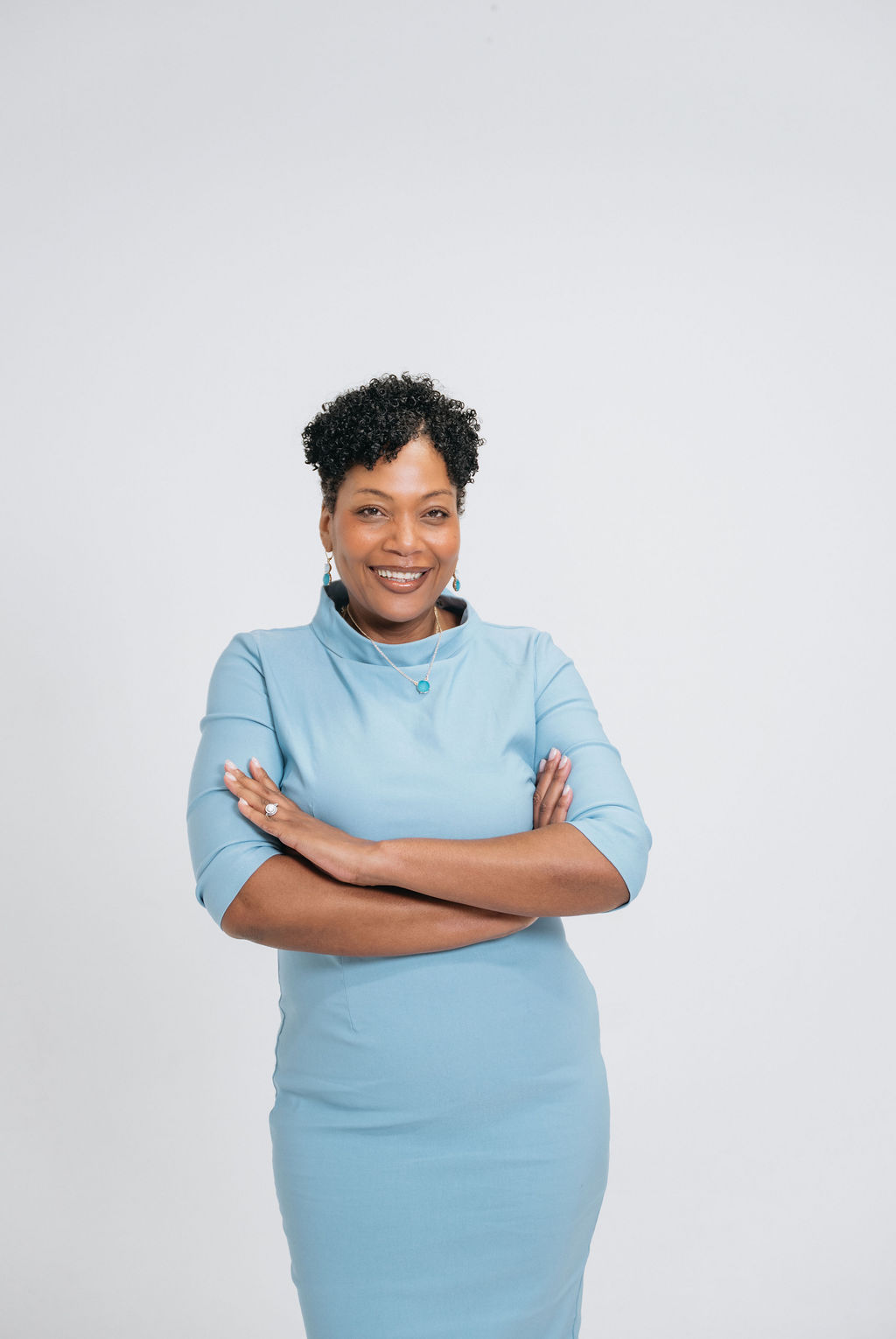
When the Flowers Stop Coming: The Truth About Grief Support After the Funeral with Kelly Edmondson

The casseroles arrive. The flowers fill the house. For a few weeks, people show up. And then they don't. For most grieving people, the silence that follows the funeral is one of the loneliest parts of loss — and one of the least talked about. In this episode, Brian sits down with Kelly Edmondson, a trauma nurse, grief counselor, and Shining Light mother who lost her son Darius on January 3rd, 2023. Kelly spent years delivering devastating news to families in the ER. She thought she understood...

 Apple Podcasts
 Spotify
 Castro
 RSS Feed
 The casseroles arrive. The flowers fill the house. For a few weeks, people show up.
And then they don't.
For most grieving people, the silence that follows the funeral is one of the loneliest parts of loss — and one of the least talked about. In this episode, Brian sits down with Kelly Edmondson, a trauma nurse, grief counselor, and Shining Light mother who lost her son Darius on January 3rd, 2023. Kelly spent years delivering devastating news to families in the ER. She thought she understood grief. Then it happened to her.
What she discovered — in the gap between clinical knowledge and lived experience — became the foundation for Timely Presence, a year-long grief support service that sends meaningful, curated gifts on the days that hit the hardest: the first birthday, the first Mother's Day, the first wedding anniversary without your person.
This conversation is for anyone who has ever wanted to show up for someone grieving but didn't know how — and for anyone who has felt the world move on while they were still standing in the wreckage.
In this episode:
- How Kelly's son Darius lived — and what his life continues to mean
- What a career in trauma nursing teaches you about grief that lived experience still catches you off guard
- How to deliver heartbreaking news with compassion and clarity
- Why people go silent around grievers — and why silence does more damage than an imperfect word
- What not to say (and what actually helps)
- How Timely Presence fills the gap in grief support after the funeral
- The first gift Kelly ever sent — and the prisms it left dancing on a wall
About Kelly Edmondson
Kelly Edmondson is a nurse, grief counselor, and the founder of Timely Presence — a year-long grief gift service designed to show up for the bereaved on the dates that matter most throughout the first year of loss. Drawing from her background in trauma care and her own journey through child loss, Kelly created a service that didn't exist before: one that remembers, so the people around you don't have to carry it alone.
🌐 Website: thetimely presence.com 💼 LinkedIn: Kelly Edmondson 📸 Instagram: @the.kelly.edmondson
Visit the Grief 2 Growth store for FREE items as well as other tools to help you along your journey:
- Guided Meditations
- My book GEMS of Healing (signed copy)
- My Oracle deck to help you connect with your loved ones
- Mini-courses
- Mini-guides
Check it out at https://grief2growth.com/store
The International Association for Near-Death Studies or IANDS will host its annual conference at the Hyatt Regency in Bellevue. The event features an all-star lineup of keynotes like Proof of Heaven Author Eben Alexander, MD, and Dying to Be Me Author Anita Moorjani. I Early bird registration rates are available through July 15.
Visit IANDS.org to register
The International Association for Near-Death Studies or IANDS will host its annual conference at the Hyatt Regency in Bellevue. The event features an all-star lineup of keynotes like Proof of Heaven Author Eben Alexander, MD, and Dying to Be Me Author Anita Moorjani. I Early bird registration rates are available through July 15.
Visit IANDS.org to register
🧑🏿🤝🧑🏻 Join me on Substack- connect with others and me
👛 Subscribe to Grief 2 Growth Premium (bonus episodes)
📰 Get A Free Gift
📅 Book A Complimentary Discovery Call
📈 Leave A Review
Thanks so much for your support
Close your eyes and imagine. What if the things in life that cause us the greatest pain, the things that bring us grief, are challenges. Challenges designed to help us grow to ultimately become what we were always meant to be. We feel like we've been buried, but what if, like a seed, we've been planted? And having been planted, we grow to become a mighty tree. Now, open your eyes. Open your eyes to this way of viewing life. Come with me as we explore your true, infinite, eternal nature. This is Grief to Growth, and I am your host, Brian Smith. Hey there, welcome to Grief to Growth. I'm Brian Smith, and if you're new here, I want to let you know this show exists because I believe that grief, as devastating as it is, doesn't have to be the end of your story. Here we explore loss, love, consciousness, and the possibility that the people we've lost aren't as gone as we fear. Whether you've been listening for years or this is your first episode, I'm glad you're here. Today our guest is Kelly Edmondson. Kelly is a nurse, she's a shining light mother, and she's a grief counselor who looked at the way our culture handles loss. The flurry of flowers that arrive in the first week, then silence, and she decided to do something about it. And if you don't know what a shining light parent is, helping parents heal, we call parents who have lost children, shining light parents, because we believe our children are shining lights and that we can be also. And Kelly certainly is. Kelly is the founder of Timely Presence, a year-long grief support service built on the simple but profound truth. It's that people who are grieving need you the most, not at the funeral, but on the Tuesday in month seven when everyone else has moved on. Drawing from her years as a trauma nurse and her own journey through loss, Kelly created something that didn't exist before, a way for friends and family to show up again and again throughout the first year, delivering meaningful, personalized gifts on the days that hit the hardest. In this conversation, we're going to talk about the first year of grief and why it's unlike anything else and why so much of the support we offer is accidentally timed to miss the moments when it needed the most. Kelly will share what she's learned from the ER and from her own grief about what people are really asking for when they go quiet, why anniversaries and holidays can ambush even the most put-together greever and what it actually means to be present for someone whose world has collapsed. So if you've ever wanted to show up for someone you love who is grieving but you didn't know how or you were afraid of saying the wrong thing, this episode was made for you. And if you're the one who's grieving and you felt like the world moved on while you were still standing in the wreckage, I think Kelly's work is going to make you feel seen. If you'd like to continue this conversation after the episode, head over to grief2growth.substack.com. That's grief2growth.substack.com. And there you'll find an article about today's discussion where you can comment and connect with me and with other listeners. So with that, let's get started. Let's welcome Kelly Edmondson. Hi, Brian. Thank you for having me on this show. I so appreciate the work that you're doing in this space and intimately understand your passion behind it. So I'm grateful to be here and share a little bit of my story. Yeah, well, thank you. I'm right back at you, fellow Shining Light parent. I know that we were talking before we start recording. Our children's passing has motivated us. But before we get into all the work that you're doing, tell me about your son. Yeah, so my son, my oldest child, Darius. Darius, absolute Shining Light. So he was born on Christmas Day. Oh, wow. I love to say he was actually a gift from the moment that he got here. And we grew up together. I had Darius very young. I was 18 when Mike and I had him. And, you know, we grew up together. And the bond that comes from that really is not able to be replicated, right? With my later children, it's just different. And so Darius was just vivacious from the beginning. You know, as a, as a young mother, he was born with a benign tumor on his head. And they removed it at eight months and he became critically ill from that and was admitted into an ICU. And so that was the first time that I really had someone that was close to me on the verge of death. And, you know, the clinicians were brilliant and he was able to rebound, but that bonded us very uniquely and also inspired me to become a nurse. And so the nurses, the care they took of him in the pediatric ICU was unbelievable. And so Darius was a rambunctious child. He was certainly a rambunctious teenager and settled out as we do as adults. And so as a young adult, he was a student and graduate at a college in Columbus, Ohio, Columbus State Community College. He graduated from there with a focus on real estate. He became an employee of the college and was, you know, really living in history and helping first time homeowners realize that moment of signing the paperwork. And on January 3rd of 2023, Darius had spent the day at his, the father's just kind of a post new year celebration. And my husband and I were on a cruise ship. My younger son called me kind of repeatedly, which was odd. And when I answered the phone, I knew immediately something was wrong. And so he was in charge of my new puppy actually. And so I said, Mason, what happened to Zeus? And he said, mom, I don't know how to tell you this. And I think back on the fact that a 22 year old was charged with delivering the message to me that Darius was dead. And so I was at sea with no stop the next day. And a son and daughter back home alone in Orlando, Florida, where we had moved to and a child who I could do nothing for. And so that really began my journey with grief and child loss, which is just very unique. Yeah, it is. And, you know, we all go through different circumstances and they're all unimaginable. And I actually have friends whose daughter passed while they were on a cruise and they got that call and couldn't get back for like, you know, it was several days. So that feeling of helplessness of, you know, you have your other people here at your other children to take care of. And you, you can't get home. That's just unimaginable. It really is just, and it was just after the new year. So I was surrounded by people who were having the celebration of their lives. Yeah. And I was really in this parallel universe. And so he had a history of epilepsy and did die peacefully at home in his sleep. But I was literally a world away. Yeah. So he had epilepsy. Was it, was it controlled or was it managed or was he having seizures? Yeah. He still, he got diagnosed his, his the year he graduated from high school. One day the kids called and said, he's acting strange. And my younger son said, he's phoning at the mouth call 911 and I'm on my way. And so when I got to the, to the hospital, he had neurons that seizures really no known cause but had been controlled off and on. So it had been a 10 year diagnosis for him controlled off and on. Interestingly, the year before he, he died, he was driving on a highway in Columbus, Ohio, and actually had a seizure and drove off the highway and landed in an embankment. Now my, my ex-husband called me and, you know, I am a trauma ICU nurse by background. So I am ready to fly. He called back and he said, not a broken bone, no head injury. He's fighting the ventilator. This is all in the ED. I think he's going to be okay. And so he had actually escaped, you know, significant harm the year before, but that, that last year was pretty troubled with the seizures. Yeah. So being a trauma nurse, I assume you've been around, you know, death and stuff. How, how do you think that informed you dealing with your own grief of losing, losing someone? You saw other people go through that. How does it impact you when you go through that? You know, my first coming out of orientation is a brand new nurse. My first Christmas at work. I just out of orientation. I had a son whose birthday was Christmas day. Yeah. And I heard overhead trauma level one in the ER. And so I knew that I was going to be admitting a trauma patient. When the ER called me, they told me it was an 18 year old, a young man who had driven on black ice. And ran into a pole. And she said, your job's to keep him alive until his parents get here. So I was a 25 year old. New nurse and the young man rolled out to the unit. And I put my all into doing what I could. So his mother could say goodbye. I was tending to him and preparing him. And I felt someone behind me and I turned and it was the parents. At that moment, he stopped. And we all knew that it was a terminal situation. And so, you know, the mother collapsed and, and. And lately I understood that my job now was to shift from caring for him to caring for her. And so that's what I did. I spent the next. Hour. Heading to these parents as a 25 year old who had no concept. Of this type of loss. But I felt like that was my calling. And so over the years, I really became the person known in the hospitals. I worked trauma, ICU, any. As the person who was first call for traumas. I had a way of caring selflessly for the families. And, you know, I had told dozens of families that their child, their spouse, their brother was gone. And I felt like I was very skilled at it, right? Many clinicians struggle with, it was just something that I felt like I could give them peace. And so, you know, I felt like I understood grief and then it happened to me. And what I knew was in those initial moments, how someone shares that news with you, how empathic they are, how clear and transparent they are, right? Not dancing around words. The real, I'm sorry. He did not make it. You know, those things matter. I knew all of those. What I didn't understand is what happened when someone walks out of the hospital. The grief is so much more than the notification. Well, I want to get into that. But before we do, let's talk about like, how do we, how do you break the news to someone? You gave some examples there when my daughter passed away, when Shana passed away, my daughter Kayla was on vacation and she was with some friends. So I had to call at first tell my, my friends that she was with the Shana pass. And then I had to tell Kayla and I just had no idea how to do that. You know, I think what I've learned through clinical time, and now I've become a grief counselor. And so really the psychology around this is that it's important to recognize that someone, you need to know where they are, right? So you're making a phone call to someone. And sometimes we have to do that in the hospital. Right. But where are you? So driving's not the right time to do that. Right. So you figure out the context and the environment that someone is in, or you plan that you sit when you are in person with someone, you're able to sit with them. You tell them, you prepare them by saying things like, you know, someone, you have to read the cues of people. There are people, you can put a hand on the shoulder. There are people that you can, and you tell them, I am sorry for the news that I'm going to share with you. Belching that begins to prepare them that this is something that they don't want to hear. Right. But then you have to be honest, you know, words like he's transitioned. You know, I'm sorry about the outcome. They're not clear enough. They're not clear enough. They're not clear enough. Denial was a very easy place to go. And, and, and questioning as a very easy place to go. You have to immediately let someone know that. Your mom. Is no longer here. I'm sorry, but your mom died this morning. You get all of that. We could. Certainly we made her comfortable. And I understand that this is devastating news, right? You also have to couch it with, this is an evening. Right. Right. And then you begin asking people their preference, right? Would you like a moment to sit with that? And I sit here with you. Would you like me to call the chaplain? Is there someone else in the family that you would like? And the most honorable thing you can do in the hospital setting. Is allow someone time and space. On uninterrupted with their loved ones. I want to allow you time. To say goodbye to your mom and the way that you'd like to do that. The best. But it's time, right? You've got to be able to carve the time. Hospitals are busy, busy places. And you've got to be able to carve the time to have a meaningful discussion with someone. Yeah. Yeah. Thanks for sharing that. Cause as I said, it's something that, you know, I never, never dreamed of, never thought about. And, you know, I had to do that with Kayla. And then I had to do it again with my friend, Mike passed away like a year or so ago and calling up one of, one of our other good friends and telling, you know, telling him. So having that, that experience with having to tell my friends about Shana and then having to tell Kayla over the phone, it gave me at least, and I had done it before. And for most of us that again, we don't, we don't think about this as something maybe we can kind of prepare ourselves for, for the types of words to use and how to, how to break it to someone. So you, you are, you experienced all this trauma. You witnessed all this grief. What did you learn about grief when you, when you finally got home? And, and I guess when you walked away from me, it was walking away from Shana's body in the hospital, you know, when, when they told me, she would pass and then having to make that turn and walk away for that was the moment for me when it really hit. What was the moment for you? Yeah. For me, you know, I think initially it was just shock. What do you mean? He's, he's deaf. What do you mean he's gone? And because I was so far away, there was no visual confirmation of that. Right. For me, when I landed in Ohio to begin preparing for the services and his father called me and said, can you go buy his socks and underwear for the funeral? How do you pick the final clothes for your child? How do you pick that? So that was a defining moment, but the most difficult moment for me and that whole acute phase was, you know, I had an open casket, but I asked for it to be closed during the service. And I did not watch them close it. I just could not do that. But when I left the funeral home, I knew that I would be coming back there in about two weeks because at the funeral, people from Columbus state payment said they were remaining an annual award in his honor. I would be coming back to give that award. And so I knew I'd be coming back in two weeks. And so even though I was leaving, it wasn't final for me because they were still what I recall a celebration of his life that was planned in two weeks. Okay. That two weeks was late January and there was a snowstorm in Ohio. So I flew up and they called and said they were canceling the cert and that for me, that's a date is the most devastating day that I have. It was my closure date and I never got it. And at that moment, it felt real that he was gone. Those moments are just, I just got chills as you were saying that, you know, because there is that moment, you know, where it just, it hit, well, it's not, it's not a moment. I guess they're moments, you know, it hits you over and over again. Like you said, well, like I was saying earlier, when I left the hospital, I remember the morning of saying the service, I'm driving to go get a shirt to wear to the service, you know, and, and I was with my cousins and stuff and you're like, you're, it's just something that's just so surreal about, you know, doing that, that for your children, because we don't expect to do that. And it's, and everyone around, there's just a heaviness in the air too, right? Because to your earlier point, the people around you don't know what to say. Right. Yeah. So that, that first year of grief, and I know that what you do, your timely presence is about helping people with that first year of grief, both the people, both the greever and the people who are around the greevers, because we, we don't know what to do. We don't know what to say. And, and what was your experience like the first few weeks, the first couple of months that timeline of that first year? Yeah. So, you know, I really just hold up at home. I was in the cocoon of my house, right? My, my husband and I, I spent, my son spent a fair amount of time with us. And, you know, I had a good friend who told me I'm going to release you from the need to answer phone calls. And I was able to, to, to, to, you know, respond to texts. This is your time. And she's pretty bossy. It's kind of good. Sometimes you have a bossy friend. Yeah. Yeah. And, and she really helped me. With that. And so I was able to just, just sit. And, you know, I had. plants that people had purchased around him. I will say they died, which is another trauma, but in that moment, they were alive. Yeah. And so I, you know, I spent time really just with me. With me and days I didn't feel like coming out of my room, I just didn't come days. I didn't feel like answering the phone. I just didn't answer the phone. And for me, that wasn't spiraling. It was a way for me to heal, because there were moments when I wanted to talk about it. And there were moments when I wanted to feel nothing. I just want to, I want to look at this wall and feel, feel like I don't owe anyone an explanation. I don't have to answer how I am. I don't have to explain what happened to him. I just want to do nothing. And so I had people in my life who gave me the freedom to do that. And so I appreciated that. As I prepared a few months later to go back to work, two things happened that really set me off. One was there was a knock at the door. I had a delivery and it was wrapped in all this biohazard tape and just an obscene presentation. Those were remaining ashes. We had had some jewelry and artwork made from his ashes. And they were the remaining ashes that came from the funeral. The presentation was terrible. It was absolutely terrible. We were coming out of COVID. I felt like the guy should be a mask. And then the second thing was the day I was going back to work, I got a letter from a funeral home, an envelope from a funeral home. And I thought they know it. They know that I'm going back to work. They're just sending words of continued condolences. This is so sweet. And I opened it and it was his autopsy report. No warning. There was no right. It just the autopsy report. Now I'm a nurse, right? So I understood everything that was in there. It was the most cold clinical experience that I've ever had. And I thought to myself, certainly the death care industry should do better than this. And so there were events like that that just had me say what we're doing is not enough. But the real thing that made me say, I am going to do something different with Mother's Day. So five months after his death, his Mother's Day, very much like the cruise. I am in this day that will never look the same for me. And every commercial you see, every store you go in, it's Happy Mother's Day. There's a celebration while you are living in this kind of parallel purgatory. And I said, the whole week was dark. And then suddenly, my mom, my sister, my niece flew in from Ohio. My daughter and my son's girlfriend came over and we spent the weekend celebrating Darius stories about him. Reminders about him laughing about things that he did. And it made what would starting to be the darkest week ever. It added light to that. And I thought everyone should have it because the reality is he's not coming back. But he's still my son. I'm still his mother. And this day still should honor our relationship. They gave that to me, which is really what was the inspiration for Timely Presence. Oh, wow. I have to ask you, how do you feel about bereaved Mother's Day? So I personally choose to celebrate Mother's Day because I'm still a mom, he's still my child, and that love still lives. I feel like, though, how people express their grief, how they express their love, and those relationships that have they've lost or have forever changed can be unique. And so I think there's space for bereaved Mother's Day. For me, I choose to live on the traditional Mother's Day because my love for him, the relationship we had and the memories I have of that are so vivid that I honor him alongside my other two children. Yeah, it's interesting because the word bereaved even. I'm part of Helping Parents Heal, and I'm not sure if you're familiar with the organization. But it's an organization for parents who have lost children. And I said in the introduction, we call ourselves Shining Light Parents, which was coined by one of our members who's a military person, and she lost her stepdaughter. And people that lost children to the military, they call them Gold Star Parents. So Shining Light Parents is kind of a thing, a play on that. And the word bereaved even, we used to be in our bio, our ethics was bereaved. And our founder Elizabeth's like, I don't like the word bereaved. And we're like, well, we start off bereaved, but we don't want to stay there. And we believe in continuing relationship with our kids. And when I was hearing you talk about celebrating Mother's Day, I understand the reason why people have that and I understand the carve out and everything. But I want to celebrate Father's Day on Father's Day, because I'm still Shayna's father. I don't need a special day because the whole thing just brings up another like, oh, another reminder that they're not here with you. And in my my belief, they are still with us just in a different way. That's right. That's right. And it makes you a different kind of dad and you're not right. You're right. Right. Right. I'm still I'm still Shayna and Kayla's father just the same. There's no there's no differentiation. So again, I don't want to for people that celebrate that that's fine. When it comes up on Facebook, I just don't say anything. I'm not saying you shouldn't do it. You should do whatever you want. But for me and for my wife, we're like, we'll just take normal Mother's Day and Father's Day because we want to, you know, I love the name of your movement or your company, Timely Presence. It's about presence. You know, our kids are still present with us. So you go through this first year of grief and you notice some things that you'd like to see done better. And so what were those things? Yeah, so I think, you know, people don't know what to say. So they don't say anything, right? So I've turned back to work at this point now, I am a health care executive. And so, you know, I come back and there were people who, who said all the right things. I am so sorry for your loss. I don't know what to say. But I'm sorry, right? Very appropriate. And then there's people who did like nothing happened. Nothing. Right. But you know, I just disappeared for three months. And a couple things, A, that's changed my relationship with them. But B, I began to understand people just don't know what to do. And so they do nothing. Or they think, well, you've been gone for three months. So you went through all that. You're back now. Right? Yeah, you're back. Yeah. And so you're ready to go. And much like Kayla is your father and wherever you go, she's your father. Shane is your daughter too, right? So you bring both of them into every room that you walk in, every new relationship that you have, every new experience, including work. And what I found was people either didn't know how to show up until back away from it, or didn't know that they should show up. Yeah. And both of those things are problems for people who are going through the grief journey. Yeah, I want to talk about both sides of this, because this comes up a lot in the work that I did, the awkwardness around grief, we don't know. And I tell you, I still don't know what to say. I've been doing this, I've been doing this work for six or seven years now, seen the past 10 years, there is no right thing to say. And there it is also kind of a landmine, because you feel like you're walking through a field of landmines, because if we say the wrong thing, sometimes the greever will really take offense to it. Because I've heard a lot of people in groups say that just really made me angry. And I'm like, we're all going through something that's new to us. We need to give each other, I think, a little bit of grace. But it's helpful if we can tell some people things like things not to say, like, God needed another angel. I've never heard anybody say that they found that useful. Yeah. Or at least he was in a sleep. Or, you know, none of those things, or this one, at least you have other children. Yeah. Yeah. The other thing that I think people don't realize as offensive is the question about how they died. Right. And the reality is early in my grief counseling, you know, my grief counselor said, you know, you're welcome to share that, right? You're welcome to share that. But people die all kinds of ways people die. And sometimes it's not that you want to share, but more importantly, there's judgment sometimes attached to that. The reality is a change is not my love for them at all. Yeah. Yeah. That that is really interesting, too, because Shana passed in her sleep, and it was from something with the heart is all we know. And we know she had a her condition called Wolf, Wolf White Parkinson's, which caused because, well, you know, to hit your nurse, but she had, she has that condition. We knew about it, but wasn't supposed to be fatal, wasn't dangerous. She wasn't on any medication. She had no restrictions, so we weren't expecting her pass. But I realized people are looking for an explanation. And I think it's kind of like the almost one insurance, like it's not going to happen to them. So they were. And I'm like, you know, when I tell people I don't know, and I'm comfortable with that, the coroner's report said one thing, her cardiologist said another thing. And people are like, did you know, did you dig into it? No, because it doesn't matter to me. It to me, it really doesn't matter. I know some people get all caught up in that. All I want to know is she was, you know, she didn't suffer, which she didn't. I don't need to know anything else. That's right. It's exactly right. And my son also died in his sleep. But you know, over time, I've met people who have lost children and from suicide or have lost children from, you know, many different things. And the reality is that can be a triggering question. But things that are safe are, I don't know what to say, but I'm sorry. Yeah. So easy to not be offended by that. Or, you know, I can, you know, we're thinking of you. You know, we're, we're, we're praying for you. Those things are benign. And sometimes they feel like not enough. But sometimes it's all you have. And I will tell you it's more than many than what many grieving people get at all. Yeah, exactly. And there's so that's the other extreme, right? We have people that say things that are flippant. They don't really think about how they land. And then you've got the people who are scared to say anything at all. And, you know, I've even had people say, well, I don't want to make you sad, you know, or they'll say something and someone starts crying. I'm sorry, I made you think about them. It's like, you know, I think about them all the time, you know, you're not going to make me think about them. That's right. And if you do recall the memory, thank you. Thank you for bringing that someone asked me once, do you feel like your gifts bring bring back the death to someone? I said, there's not a day I don't know that I that my son's dead not one day. I cannot forget that. Right. But some it's it's touching to know that that someone else is also thinking of them, which you just don't want your person to be forgotten. Right. Yeah. And I think that's such such such an important point when you really need to drive home with people. We don't want our person to be forgotten. And we certainly don't forget them. And, you know, and with timely presence, I know one of the things in my experience, I'll talk to a lot of people experience this is that, okay, for the first six weeks, you know, people are sending casseroles, people are asking if they can do things for you and everything, three months or so, everybody's gone back to their life, you know, and and you do feel like, okay, what, you know, what what's next? So tell me how timely presence helps with this. Yeah. So, you know, there's so much anticipatory grief in that first year, I think, to these events that I say can be triggering, right? Yes, yes. How am I going to feel on this first father's you don't know I've not lived it. How am I going to do on her birthday? What's Christmas going to be like? And, you know, those were really challenging days days for us, my son was born on Christmas, and died on January 3. So the entire holiday season for us looks different. Yeah, absolutely. So what what what we do is we send gifts on those days that are predictable to be more challenging. Now, there is certainly truth that you will be walking down the street, and you will see a young woman who looks like your daughter walks like her, laughs like her, and that will be a trigger that will happen at infinitum. And thank God for those memories of her, right? Right. But we know that there are certain days that are just more difficult, the first wedding anniversary without your spouse, that first Mother's Day. And so what we do based on the relationship that that the gift receiver has with the departed, we send a year's worth of gifts on all of those those days. And so they come at the right time. You know, I realized that Darius's birthday is next week. And, you know, this one time will allow you to hear him on, you know, more difficult days. And so it's just been art and science, you know, talking to people, tell me what kinds of memorial gifts you received that added value. Let's talk about the days that were difficult. And, you know, we spent a lot of time kind of researching that, and then built packages, really based on those relationships. So we do one for spouses. We do one for parents. We do one for friends and family. So, you know, that's it catches a lot of people. And then we also do one for a group that's often forgotten. And those are families who have lost a child through miscarriage and stillbirth. Those losses can be devastating and they're under recognized and under appreciated. And so we have packages that show up on Mother's Day for a mom that gave birth to a stillbirth child to get something on the anniversary of the death because, you know, those are very difficult for people to recall and speak on. And we stand in the gap for those families. So what's some of the feedback you've got from people who have sent the gifts and people who have received the gifts? Yeah. So my favorite, the first gift that ever went out was to a mom who had out of stillbirth. And her employer actually heard about our business, remembered that we were coming up on the year anniversary and ordered. And so this woman received the first gift in that package, which is a crystal sun catching on the anniversary of the loss. And what she said was, she walked out to her, the darkest day she'd ever had, right? Because no one remembers this. No one met the baby. So no one remembers that. She walked out to her mailbox. There was a package with a dub on it. She came back in the house, she opened it, she was by her window. And on the darkest day that she had, suddenly there were prisms dancing on her wall. And she said, she felt like a quote was, God was in the details that day. And so that was so affirming. But those are the kinds of messages that we received, you know, spouses who say, I received for wedding anniversaries for a woman, we send preserved roses, they're bright red, they're shaking a heart, they live five years. And her husband always sent her roses on her anniversary, right? And so she received that, she said, it was like Mike was sending me a hug from above. You know, all of the feedback from the recipients has been very similar. You know, we've had the gift givers reach out and say, I didn't know what to do for my life. I didn't know what to do for my employee, or I was I was out of words for my friend. Thank you for coming in. And then we send a note, obviously, of who it's from. But we also send a reminder to the person sending the gift so that they know. Brian's go Brian's wedding anniversaries next week so that they can remember to check in because it's not that people don't care. Right? Right. Yeah, it's not that don't care, but we're all busy. We have all these different dates to keep in our in our minds and trying to, you know, trying to keep the date of someone else's loss, you know, a year later, it's not an easy thing to do. And what it appeals to me about your services that, okay, I still remember the person I care about, I put the effort into it, but then I can kind of set it and forget it as so to speak. But I love the reminder also, so I can also do a personal touch, right? So maybe a day before or day after, I can give them a call. And because that's that's as important as getting the gift. But, you know, one of the biggest things in grief is we want to we need our grief to be witnessed. We need other people to understand, you know, to have some inkling of what we're going through. And those little things like that can just be so uplifting. And I love what you talked about with that with the one with the miscarriage, because that's not a date most of us are going to remember, because it's not a birthday, it's kind of a death day, but we don't remember death days. So it's it's great to have that reminder. Yeah. And so unilaterally, the feedback has been it's actually been healing to me. And this ongoing journey to be able to deliver to people that the witnessing the reaffirming the presence on days when I think they felt like they were going to be forgotten. And it's always it's never the first gift, right? The first gift comes right after the funeral when you're getting many things, right? Right. But it's the second, the third, the fourth, right, that people are overwhelmed by the ongoing commitment to walking with them. Yeah. So walk me through the process. If I'm someone who's signing up for your service to send to someone else, what does it look like for me? So it's it's it's we believe we've made it as simple as possible. You pick the relationship what you know, and there's a couple of pieces of information we need the name of the person we're memorializing the date of birth, the date of death. And then if they were married, we'd love the anniversary. If not, we will send things on Valentine's Day. Okay. If it's a parent child relationship, we automatically calculate Mother's Day and Father's Day, you know, we're able to do that. And we ask for one photo because the gift that comes on the anniversary of law, the death day is a beautiful crystal photo keepsake. And so we ask for one one photo, which can be uploaded any time during the year. So we'll send reminders. Okay. But those are the pieces of information that we get once we receive that, we take care of the rest. So you enroll them. It's a one time payment. And for a year, you don't have to worry about it. And you know that your loved one is being properly cared for. Okay, so I don't even have to choose the gifts. You've curated the gifts already. Okay. Yeah. Again, it sounds like such a such a needed service for people because again, we don't know what to do. My, my wife and I, someone sent us wind chimes. I saw you have wind chimes is one of your gifts. And it's, and we're like, this is a great, so now every time that someone passes away, we give them wind chimes because we've got them, you know, for her father and for Shana. And we sit on our deck and we hear the wind chimes, we think about them. So that's, I think that's a really great gift, but the sun catchers, you know, those are great too. And again, people, we don't know what to do. We don't know what to send. And we were looking for things like to, to, we want to care, but we also can't, you know, really keep all these things, you know, in our minds. So that one time thing, I think is a great service that you're offering. Yeah, it's been healing. And it's really been based on both my lived experience and what I've learned about grief, both clinically and through grief counseling, but more importantly, just from talking to people, right? The first gift that comes is a wooden, an engraved wooden memory box. And why is that your first gift? Well, it's when you have all the things, right? So your spouse passes away, there are obituary, there's all kinds of documents and photos and things that are around, and it's a beautiful place to keep them stored and protected. And it's very practical, but it's a gorgeous gift that can lay out on a coffee table or in a desk. None of them are obnoxious and say, this is a, this is a grief gift. Yeah, they fit into the decor. But I mean, I think through feedback and collaboration, we've been really thoughtful in the things that were selected. Well, it's obvious to me, you've done a great job, because as you're talking to some of the gifts, after my daughter passed, a friend of mine took a little wooden box, round wooden box, and she painted the top of it with, you know, my chain of savor color, which is purple, she paid this little scene on it. And it's to put in things. So I've got feathers in there, I've got dimes in there, you know, things that are fine. And I have it on my meditation altar for Shana. That's one of the gifts that I remembered, you know, from my friend that, and then like I said, the wind chimes, suncatcher, we've got a couple of suncatchers. So those are some of the gifts that have been really meaningful to us. And as you said, they're not obnoxious. They're just like the one things in my bedroom on my meditation altar, the wind chimes are on my deck, and the suncatcher is in the kitchen. I look at those, and I think about Shana. So those are great things. And people, again, people, we don't know what to send or what words to say, or maybe what dates to choose them. You've chosen some very, you know, powerful dates that we can remember. It's not just that the anniversary and the birthday, but it is Mother's Day. And that first Mother's Day without a child is, I can't speak for Mother's Day, but I can speak for Father's Day. It's devastating. It devastated the first Christmas, right? The holiday season, they look different. And it's great. So well, thanks, Brian. That's been very affirming that through your experience, both as all the work you're doing in grief, but also as a father that these gifts resonate with you. It's just continued affirmation that Darius is guiding my steps. I know that. Yeah, well, you know, as I asked you, tell me about him, and you talked about, you know, how he shaped your life. And our children, we think about shaping our children's lives as parents. It's like, it's our job to shape them and form them. And I'll never forget the first time after my daughter passed, one of my cousins said, well, you know, Shana is your ancestor now. And I said, what are you talking about? And she goes, yeah, we know when people pass in spirit, they become your ancestors. And so, you know, our children are shaping our lives. And, you know, we are talking with a client the other day, she's talking about like the legacy, you know, of her son, who was a little bit younger than your son when he passed and a little bit older than my daughter. And I said, you know, our children have more legacy than we were like, we don't really have to keep their legacy alive, because they've made an impact while they were here. But we get to continue that through the work that we do that's inspired by them. So it's a great kind of a full circle thing, I think. It really is. And it keeps you accountable, right? I am helping to carry on. He was destined to make an impact in this world. And he asked, he's been able to do that, not just with the years that he lived. But you know, he's guiding that work. And it's an honor to be able to help carry that forward for him. And so it's purpose driven every day. Yeah, absolutely. Well, you know, it's interesting. I interviewed a woman, but she was a girl when her brother passed and they were in high school, I think she was a sophomore and he was like a senior. And he passed suddenly, and she went on and went into finance and stuff. But she really had this, she didn't have a passion for that. So she decided to start a jewelry company. And now she has a jewelry company that does legacy jewelry. And it's named after her brother. And she was telling me, I said, what would you think your brother would say to you if he could speak to you right now? She goes, he would say, I can't, you never thought you'd still be thinking of me all these years later, because she's like in her, I think late thirties now. It's been like 20 years since he passed. So our loved ones, they do live on through us. And we get to make a choice as to, you know, how we deal with it. And I love what you're doing, you know, in terms of, you know, continuing his legacy, carrying on his legacy and doing inspirational work, you know, in his name. You also you understand the healing that comes with us, right? Yeah. And I tell people all the time, I meet people all the time, you know, people, you know, love to hear stories of resilience through grief. And so they reach out on social media and through various networks. And you know, one of the things that you kind of opened with this, I want people to know that there's still hope on the horizon. The future looks different than I had originally planned. And, you know, his friends, they're all at the age now, they're used to pictures of them getting married and they're, you know, they're having kids and all these things that he never had the opportunity to do. But how I envisioned my life looking as different, but but no less impactful. And so, you know, finding people around you who support the pivot matters, and will support you and even encourage you to find ways to change all the time. Yeah, yeah. Well, as you said, it's different, you know, as part of helping parents heal, you know, a lot of times we'll talk about like, people say, well, if I could choose to have them here, you know, of course I would. And, you know, the thing is, we don't know what our children's lives would have looked like, you know, had they not passed, we don't know what our lives look like, had they not passed. But we do know that we can choose to make meaning from it, right? We can take what we've been given and do something with that. And it can be something beautiful. And I know it's really hard to hear this when we talked about that, those initial stages of grief, that cute stage, I guess I would call it. You don't want to hear about this. And that's fine, I understand that. But what we can do is give people hope. We can offer up an example of like, this is what can become of this. And you're, you know, you're a great example of that. And again, helping people to help other people through grief is a very honorable thing. So, I appreciate what you're doing. So, for people that are listening, and I was going to, I told you before we started, I was going to ask you this question. So, anything that we didn't cover that you'd like to talk about? Anything you want to get out? I think the only thing that I would like to say is that I am grateful for grit. And that's all. And I don't know where it came from, because people ask me that all the time. I'm grateful for grit. But what I will say is this, there was a moment in my grief where I said to my sister, and she reminds me this all the time, I have to find purpose in that. And when that moment comes, no matter what difficulty in life that you're facing, when that moment comes, sees the call. Whatever that looks like sees the call. And Darius Anthony Torrance lived 28 years on earth. The world will never be the same because of what he added. I'm determined to make, to reverberate that impact larger than he could imagine. One day we will reunite and he's going to say, mom, my goodness, you are something else. That's what I'm waiting on. Yeah, I'm glad I asked you that question. I love that so much. You know, the thing is about, because people come to me all the time, they say, what's my purpose? What's my purpose? And as a coach and as a grief guide, I'm like, I can't tell you what your purpose is because I don't think it's a singular thing. And you talk about finding purpose. And I will even, I'll take it a step beyond that. We can create purpose. So, you know, sometimes people will look and say, what's the lesson in this? What's the meaning in this? What are you going to do with it? What are you going to make with it? And that's what you've done. You didn't, you didn't find purpose. You created purpose. And as you said, every one of us has a role here and everyone has a unique role. So yeah, the world is not the same without them being here physically. But it's also not the same because they did leave when they did. So both things are true at the same time. You said that beautifully. And so I'm inspired every day. I see grieving people doing all kinds of things. They're organizing laws. They're organizing meaningful communities on social media. They are, you know, they are finding ways to give back in ways that matter. And so, you know, everybody's story is different. And how they show up in the world is different. I've come a long way from those days when I was sitting in my room, not answering calls, not answering texts. Yeah. But I needed those days. There's a time for that too. Yes. There is a time for that. Absolutely. Well, Kelly, we're coming to the end of our time. Remind people of how they can reach you your website. And if people can reach out to you personally, you know, if you want to give that information out, this now's the time to do it. Yes. So our website is the timely presence.com. The timely presence.com. I am pretty active on LinkedIn. So Kelly Edmondson, that's E-D-M-O-N-D-S-O-N. And on Instagram, I am the dot Kelly Edmondson. All right. Well, Kelly, thanks so much for being here today. Thanks for what you're doing. And thanks to Darius for what he's done for all of us. Yes. Thank you for building this. I appreciate the time. Grief doesn't follow stages, timelines, or rules. If you've ever wondered, am I doing this right? You're not alone. That's why I created the grief check-in. It's not a test. There are no right or wrong answers. It's simply a gentle way to understand how grief may be showing up for you right now. In just a few minutes, you'll gain clarity and language for your experience without judgment, labels, or pressure to move on. If you're wondering where you are in grief, this is a safe place to find out. Go to grief2growth.com slash check-in. That's grief2growth.com slash check-in.